
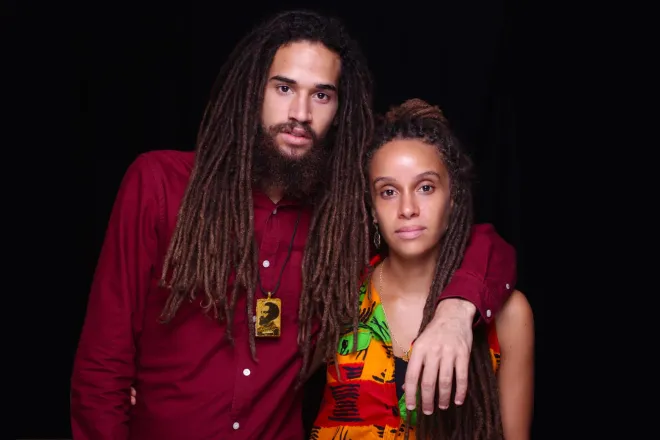
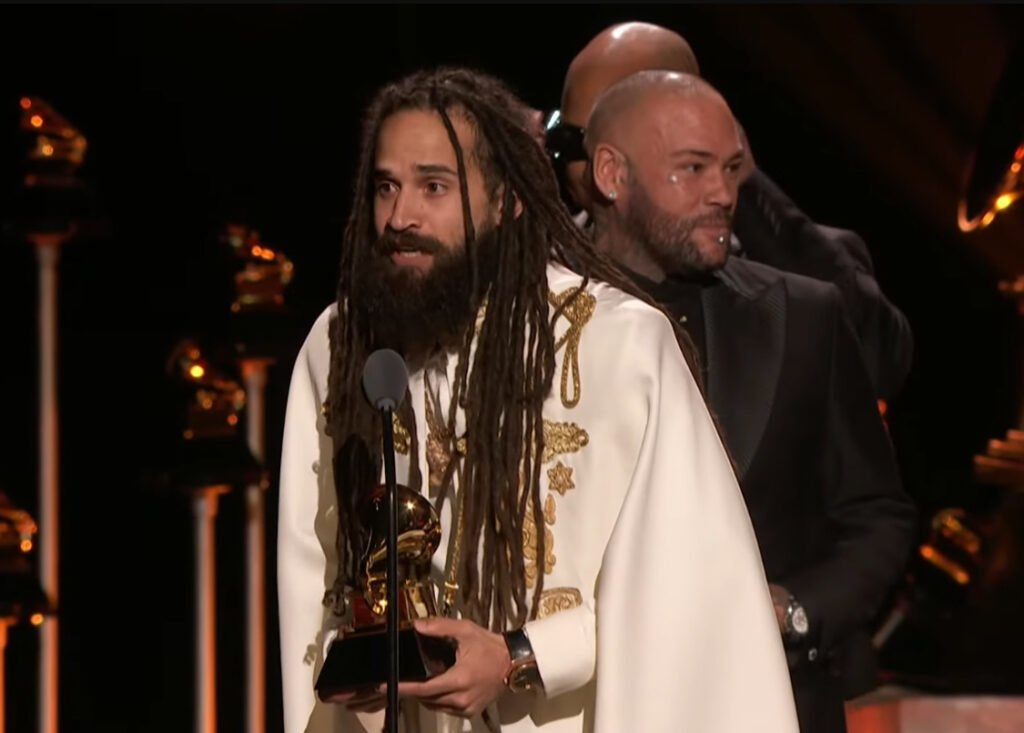
On Sunday, February 1, 2026, a Jamaican name rose above a stacked field and took home the Grammy for Best Reggae Album at the 68th Annual Grammy Awards in Los Angeles. The winner was Keznamdi, and the album was Blxxd & Fyah.
He beat projects from some of reggae’s most visible voices, including Vybz Kartel, Lila Iké, Mortimer, and Jesse Royal. For many viewers, it was a surprise. Not because the music wasn’t worthy, but because Keznamdi is one of those artists who has been building a serious, international career without the loudest spotlight following him around.
This is the story of how a youth raised in the hills of St. Andrew, surrounded by instruments and touring schedules, quietly became the kind of artist who can win the biggest trophy reggae has to offer.

A childhood where the studio wasn’t “somewhere else”
Keznamdi’s origin story doesn’t start with a talent show moment or a sudden viral clip. It starts at home. He was born in Kingston, Jamaica, and music wasn’t just present around him. Music was the family’s daily life.
His parents were lead singers of the international reggae band Chakula, and their world was built on rehearsal, recording, and touring. The studio wasn’t across town. It was in the house, tucked into the lush St. Andrew hills, close enough that a child could fall asleep to guitar strings and wake up to vocals being tracked.
That detail matters because it shaped how Keznamdi treats music. For him, music was never a phase or a hobby. It was a craft he watched up close, a language spoken around the dinner table, and a discipline he absorbed long before he learned the industry vocabulary for what he was living.
The first recording: age five, already performing
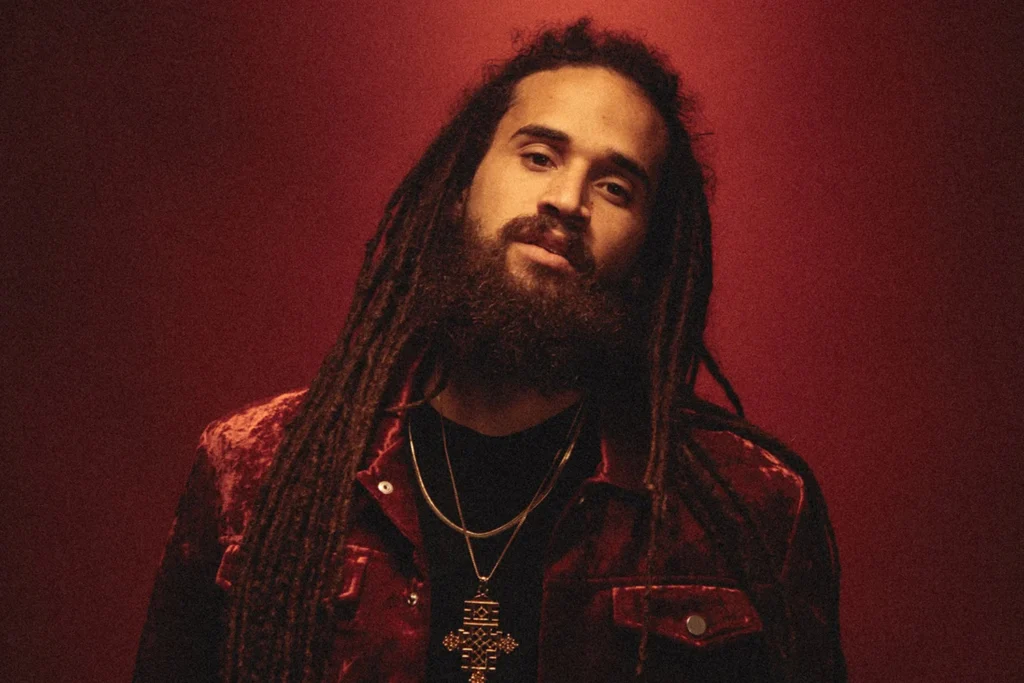
By the time he was five years old, Keznamdi recorded his first song, “Mix A Color,” an educational track inspired by his mother’s background in early childhood education. And it wasn’t just a cute family keepsake. He performed it on tour, appearing during his mom’s album release run for a children’s project that reportedly became a major favorite in Jamaican primary schools.
That early experience did two things. It made performance normal, and it made message central. Even as a child, the music had purpose.
A global upbringing that changed the way his reggae sounds
Then life widened his ears.
Keznamdi didn’t only grow up in Jamaica. His family lived in Tanzania for several years. He later completed high school in Ethiopia. Those years weren’t tourism. They were formative living, the kind that rewires your sense of rhythm, language, culture, and identity.
When people hear Keznamdi’s sound today, they often describe it as reggae with extra colors in it. That’s not a marketing trick. It’s a reflection of the places that raised him. You can hear reggae at the root, but also the influence of African melodic instincts, contemporary cadences, and a modern approach to groove and arrangement that doesn’t feel forced. It feels lived.

The athlete path and the pivot
When he moved to the United States for college, it wasn’t only to chase music. He attended Saint Mary’s College in Northern California on a soccer scholarship, aiming to play at a high level while still creating.
But the story took a turn many artists will recognize. After an injury cut short the athletic route, music moved from being one passion among many to becoming the central focus. Not because it was the easiest option, but because it was the one that had always been there, waiting for full commitment.
Sometimes destiny doesn’t arrive like a miracle. Sometimes it arrives like a door closing, forcing you to walk through the door you’ve been circling your whole life.

Building the catalog the hard way
Keznamdi’s career has never read like a shortcut.
In 2013, he released the Bridging the Gap EP, which helped establish his presence internationally and signaled that he wasn’t simply making singles. He was building a body of work. Over time, he continued performing and growing his fan base, especially through live shows across North America and the Caribbean.
Then came moments that quietly expanded his footprint outside reggae-only circles. He moved in and out of collaborations and cross-genre spaces without losing the reggae center. Those are risky moves for many artists, because the identity can blur. In Keznamdi’s case, the identity stayed intact because it wasn’t built as a costume. It was built as bloodline.
Bloodline: legacy as a mission, not a tagline
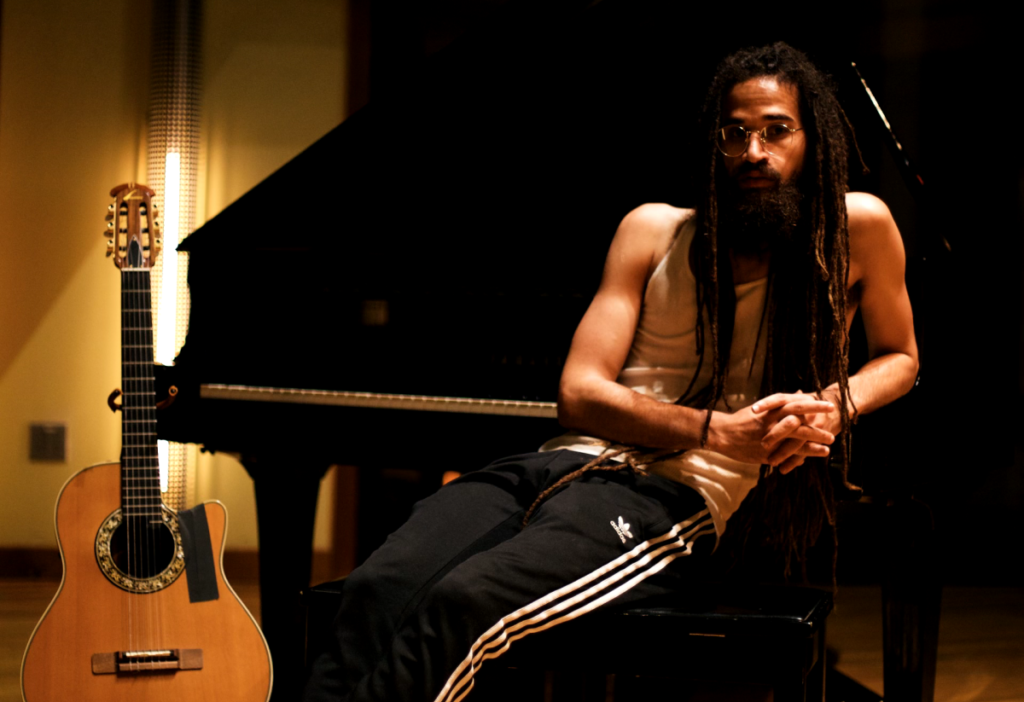
In 2019 he released his full-length debut, Bloodline, on his independent label. Even the title tells you what matters to him. This wasn’t an album trying to chase a trend. It was an album trying to place a flag.
The idea was simple, heavy, and Jamaican at its core: what you pass down matters more than what you show off. Your legacy is not only the work you do, but the people you protect, the family you build, the community you represent, and the values you refuse to trade away.
That theme didn’t disappear. It evolved.
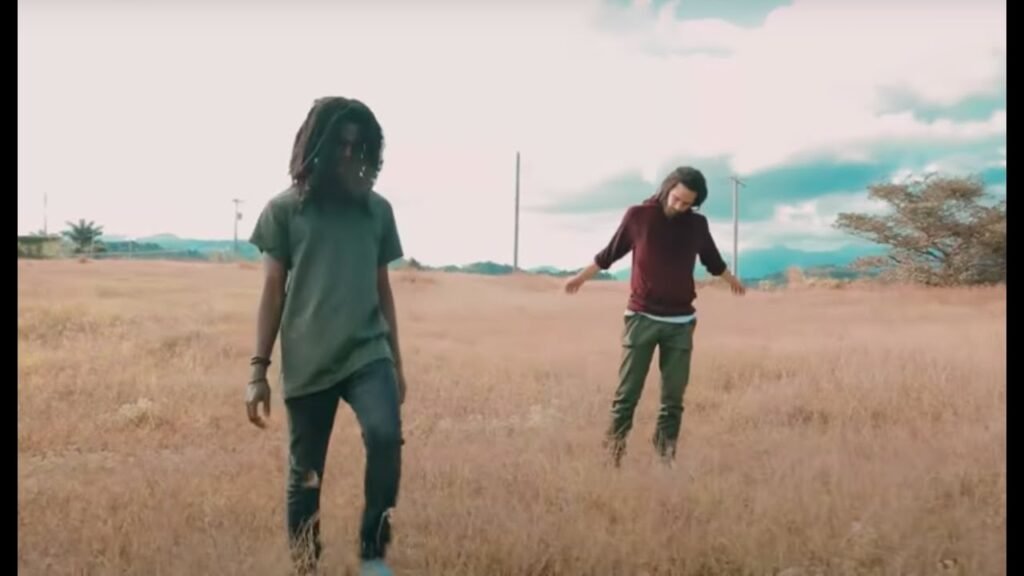
Blxxd & Fyah: the album that turned a quiet career into a headline
On August 22, 2025, Keznamdi released Blxxd & Fyah, a 13-track project through Keznamdi Music Group. The title wasn’t chosen for shock value. It’s a concept.
In Keznamdi’s framing, “Blxxd” represents sacrifice, the work, the energy spent, the price paid. “Fyah” represents rebirth, burning away what must be burned, and the fire needed to confront injustice and push forward. It’s also a deliberate continuation of the bloodline theme. Same mission, grown-up form.
Sonically, the album balances roots reggae with modern production and contemporary rhythm choices, but the real backbone is the writing. Keznamdi isn’t interested in empty anthem lines. He leans into history, politics, identity, spirituality, and the everyday pressure of trying to be a principled person in a world designed to reward compromise.
Across the project, you hear recurring concerns that feel especially Jamaican and deeply global at the same time: colonial aftermath, economic dependency, cultural extraction, the tension between tourism and locals, and the way modern society often tries to numb people into silence.
This is also where his lived experience sharpens the blade. A youth who has lived in Jamaica, East Africa, and the United States doesn’t just talk about “the world” in a vague way. He’s seen different systems up close. So when he sings about struggle, it doesn’t land like a performance. It lands like observation.
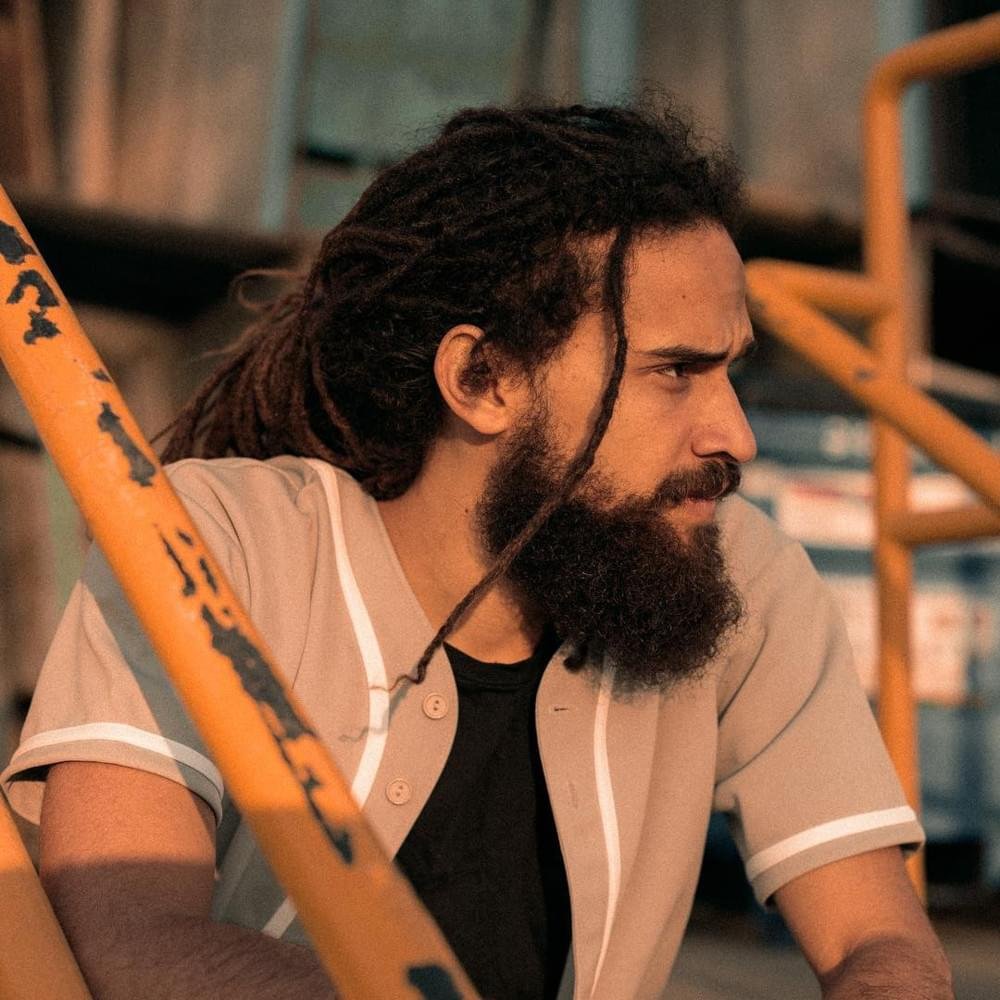
Family, Rastafari consciousness, and the voice behind the message
Keznamdi’s story is also inseparable from family collaborations and a spiritual foundation shaped by Rastafari consciousness.
He has spoken openly about being raised in a household where discipline, food awareness, and questioning the status quo were normal, even when it made social life harder. That upbringing strengthened the family bond and created a kind of inner compass that shows up in his music as clarity.
Family is not just a theme. It’s part of the method. He has collaborated with relatives and credited them as major contributors to his growth as an artist. That sense of lineage is one reason his music feels anchored, even when the production goes modern.
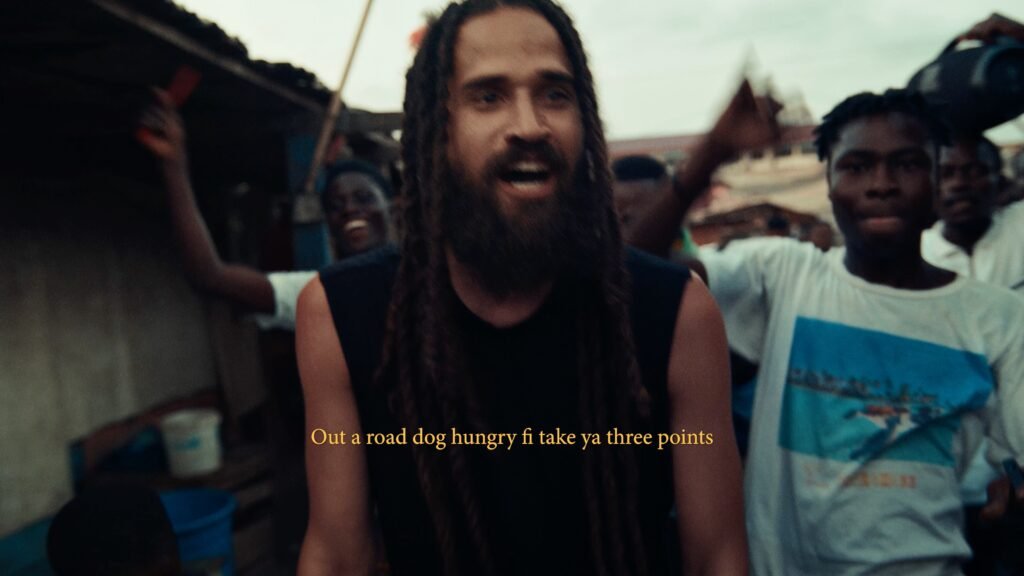
Grammy night: the moment the world had to learn the name
Then came February 1, 2026.
On a night when reggae fans expected the usual giants to dominate the headlines, the Grammy went to Keznamdi for Blxxd & Fyah. It was his first Grammy nomination and it became his first win.
For longtime listeners, it felt like confirmation. For new listeners, it felt like discovery.
And that’s exactly why this moment matters. Not because awards magically create greatness, but because they force attention toward artists who have been doing the work without begging the algorithm for permission.

Why so many people still don’t know him
Keznamdi didn’t build his career on scandal. He didn’t build it on gimmicks. He built it on catalog, performance, message, and steady expansion.
That path creates something more valuable than a moment. It creates a foundation.
It also explains why some people are only hearing his name now. In an era where loudness is often mistaken for impact, artists who move with patience can be overlooked by casual audiences until a major institution points and says, “Pay attention.”

The real headline
Keznamdi’s Grammy win isn’t just a trophy story. It’s a storyline about legacy fulfilling itself.
A youth raised in a home studio in the St. Andrew hills, son of touring reggae musicians, shaped by life across Jamaica, Tanzania, Ethiopia, and America, chose the long road. He wrote with intention. He built with family. He kept the reggae root while allowing the branches to grow.
Then, on one Sunday in February 2026, the world caught up.