
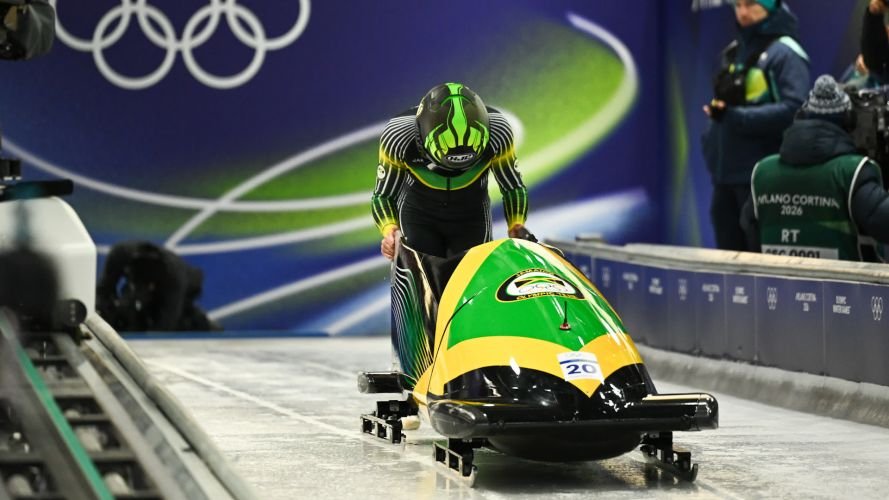
When the ice settled at the 2026 Winter Olympics, Jamaica’s lone female bobsleigh star, Mica Moore, had already carved another chapter into the island’s unlikely but inspiring winter-sports story. Competing in the demanding women’s monobob discipline, Moore secured a 14th-place finish against the world’s elite, a result that reflects both personal resilience and the steady expansion of Jamaica’s presence on Olympic ice.
From the Track to the Ice
Long before she became one of Jamaica’s most recognizable winter athletes, Moore was known in athletics circles as a sprinter in the United Kingdom. Her early sporting life revolved around raw speed and explosive power, qualities that later translated naturally into the push start required in bobsleigh. The transition to sliding sports came through talent identification programs designed to recruit athletes from track and field into winter disciplines.
For Moore, that opportunity reshaped her entire sporting path. With Jamaican heritage and a federation actively building its women’s bobsleigh program, representing Jamaica became both a personal connection and a competitive opening. The decision placed her in a national story still being written, where each athlete helps define what winter sport can look like for a tropical nation.
A Survivor’s Strength
Moore’s journey to Olympic competition has been marked by extraordinary adversity. Early in her bobsleigh career, she survived a violent high-speed crash that left her with severe injuries and required multiple surgeries. The recovery process was long, uncertain, and physically demanding. Many athletes never return to elite sport after such trauma.
Moore did more than return. She rebuilt her strength, relearned technical control, and gradually re-established herself as one of Jamaica’s most skilled sliders. That comeback became central to her identity as an athlete, symbolizing resilience and mental endurance as much as physical ability.
Understanding the Monobob Challenge
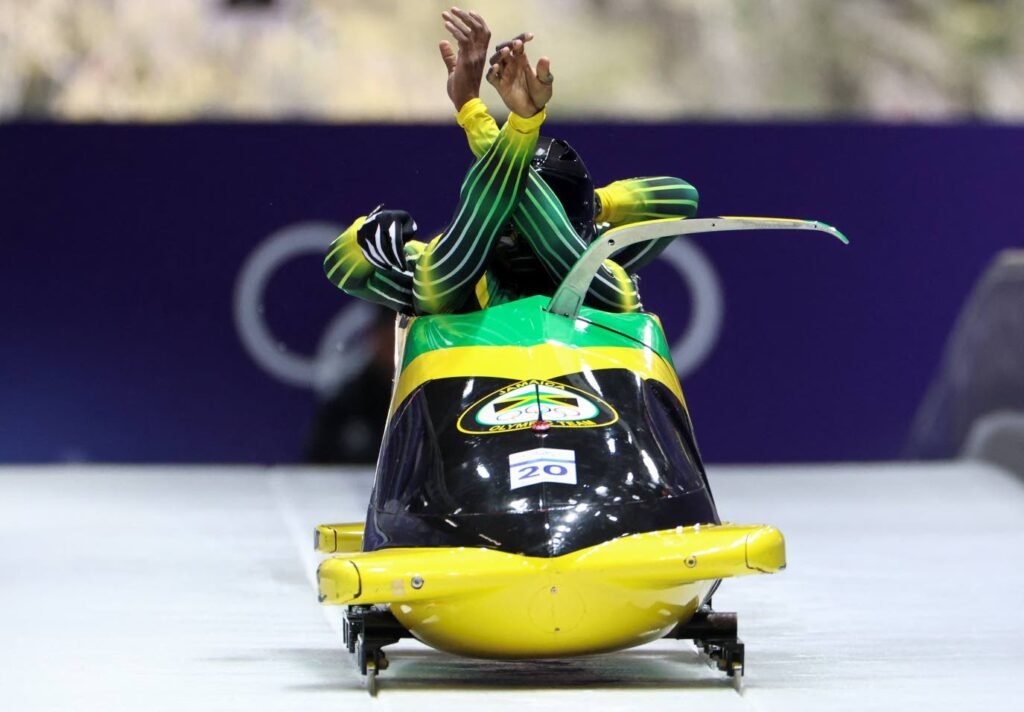
The women’s monobob is one of the newest Olympic sliding events and among the most technically demanding. Unlike traditional team sleds, the athlete competes entirely alone, responsible for the start, steering, speed management, and aerodynamic positioning across multiple timed runs. Every movement directly affects performance, and there is no teammate to compensate for errors.
For athletes from nations with limited winter infrastructure, the event offers both opportunity and challenge. Standardized equipment reduces financial disparity between countries, but success still depends on access to training tracks and repeated experience on ice, resources often scarce for tropical programs. Moore’s development within this environment underscores the scale of her achievement.
Jamaica on Ice: Continuing a Legacy
Jamaica’s winter Olympic narrative began famously with the men’s bobsleigh team in 1988. Since then, the country has steadily broadened its participation, particularly in women’s sliding disciplines. Moore stands at the forefront of this evolution. Her presence in monobob reflects a new phase in which Jamaican athletes are not only symbolic participants but technically competitive contenders in specialized events.
Finishing 14th at the Olympic level places her firmly within the global competitive field, especially significant given the historical dominance of European and North American programs that benefit from deep winter-sport traditions and facilities.
The 2026 Olympic Performance
Across the Olympic heats, Moore delivered controlled and disciplined runs marked by clean driving lines and stable sled management. Consistency is critical in monobob, where small steering errors can multiply rapidly through curves and cost valuable time. Her performance placed her ahead of several established sliding nations and positioned her solidly mid-field among elite competitors.
Within Olympic sliding sports, a top-15 finish is widely regarded as a competitive standing rather than participation, highlighting the quality of Moore’s Olympic campaign.
Representation Beyond Results
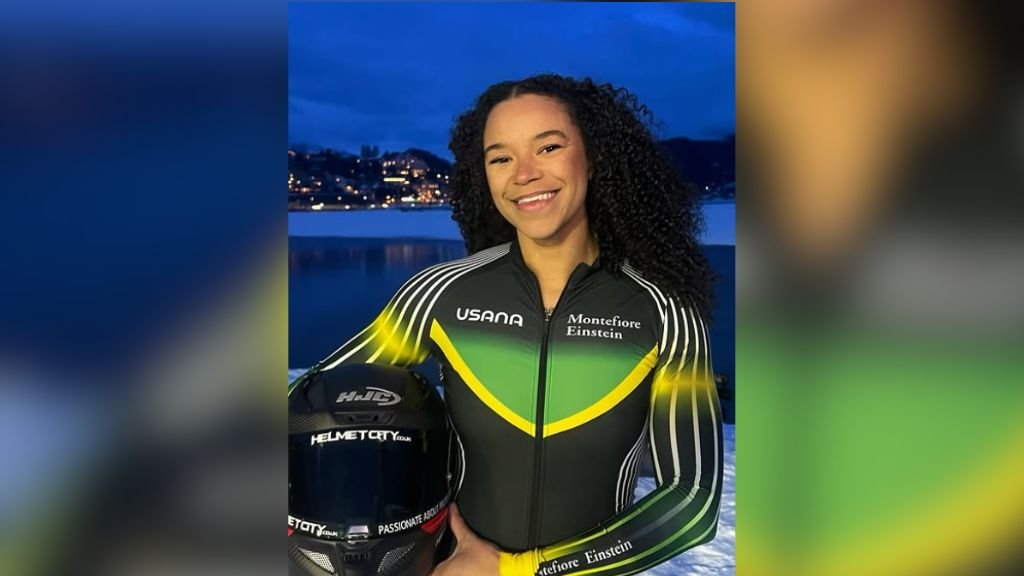
Moore’s Olympic presence carries meaning beyond placement. As a Black Caribbean woman competing in a historically Eurocentric winter sport, she embodies representation rarely visible on global ice tracks. For Jamaica, a country synonymous with sprinting and sunshine, each winter Olympic performance challenges assumptions about climate, geography, and athletic identity.
Her visibility signals to young athletes across the Caribbean that winter sport is not geographically exclusive. Talent, determination, and opportunity can bridge even the widest climate divide.
Building Jamaica’s Winter Future
Jamaica’s sliding federation continues to invest in recruitment from track and field, international training partnerships, and the development of women athletes. Moore’s Olympic journey now serves as both a benchmark and an inspiration within that system. Her path from injury recovery to Olympic competition provides a model of persistence and adaptation for future Jamaican sliders.
Every international start she makes contributes experience not only to her own career but to the collective knowledge of Jamaica’s winter program.
More Than a Finish Line
A 14th-place Olympic finish may not dominate headlines in traditional winter nations, but for Jamaica, it carries profound significance. It represents survival after injury, transition across sporting worlds, heritage embraced through competition, and a tropical nation asserting presence on frozen ground.
In 2026, Mica Moore did more than descend an Olympic track. She continued redefining where Jamaica belongs in global sport, not only on warm running lanes of sprint dominance but also on the cold precision curves of Olympic ice.