
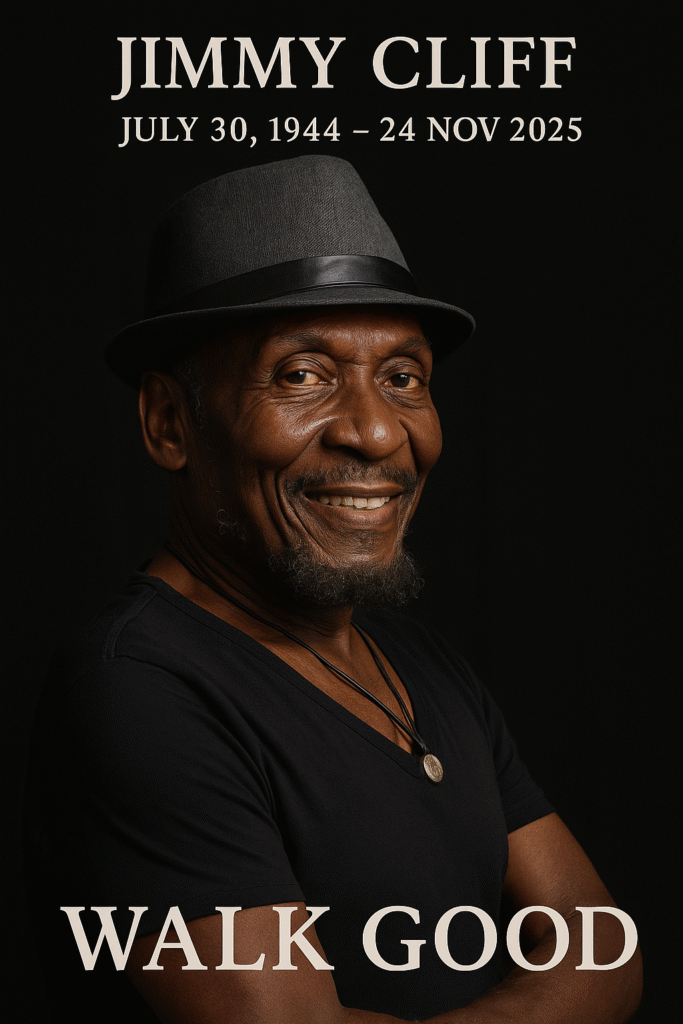
Jimmy Cliff’s story spans more than eight decades — a journey shaped by poverty, talent, determination, international rebellion, cinematic revolution, and a voice that carried Jamaica to the world. His passing on November 24, 2025, marked the end of a monumental era, but the life he lived remains one of the greatest cultural legacies ever produced by Jamaica.
HUMBLE BEGINNINGS IN SOMERTON
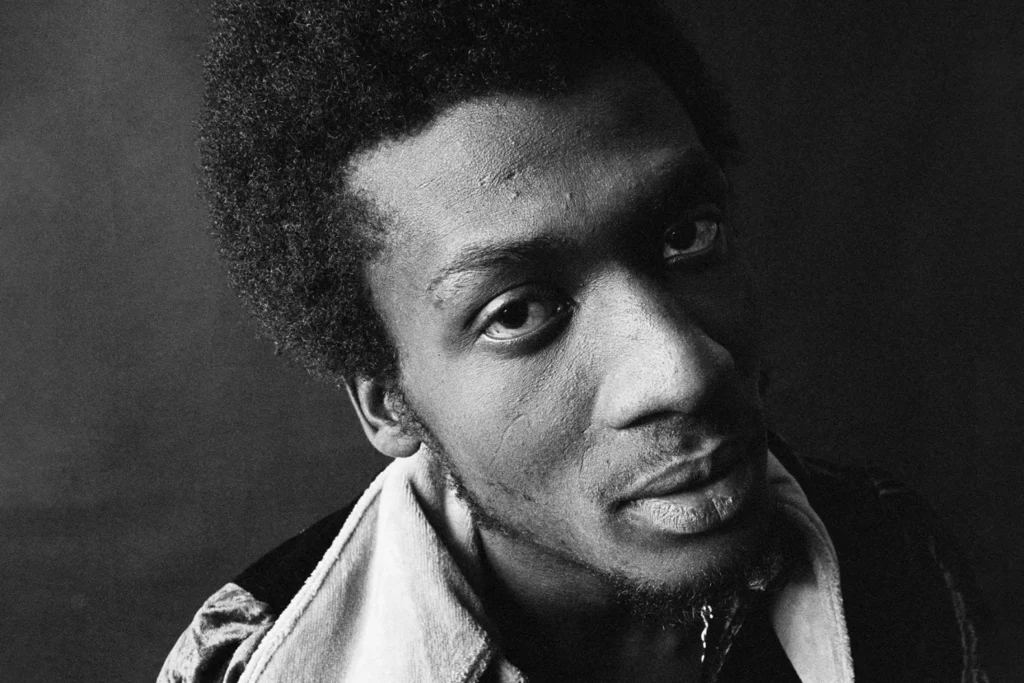
Born James Chambers on July 30, 1944, in the quiet district of Somerton, St. James, Jimmy Cliff grew up in a rural setting defined by hills, community farming, and the emerging sounds of post-colonial Jamaica. Though his family was poor, the home was filled with music — mento rhythms, church hymns, and early ska drifting from radios and local yard dances.
Cliff discovered his voice early. As a child, he crafted homemade instruments, joined community singing groups, and immersed himself in stories and songs. Even before his teenage years, he believed music would carry him beyond the confines of rural life.
THE MOVE TO KINGSTON — AND THE SHAPING OF A STAR
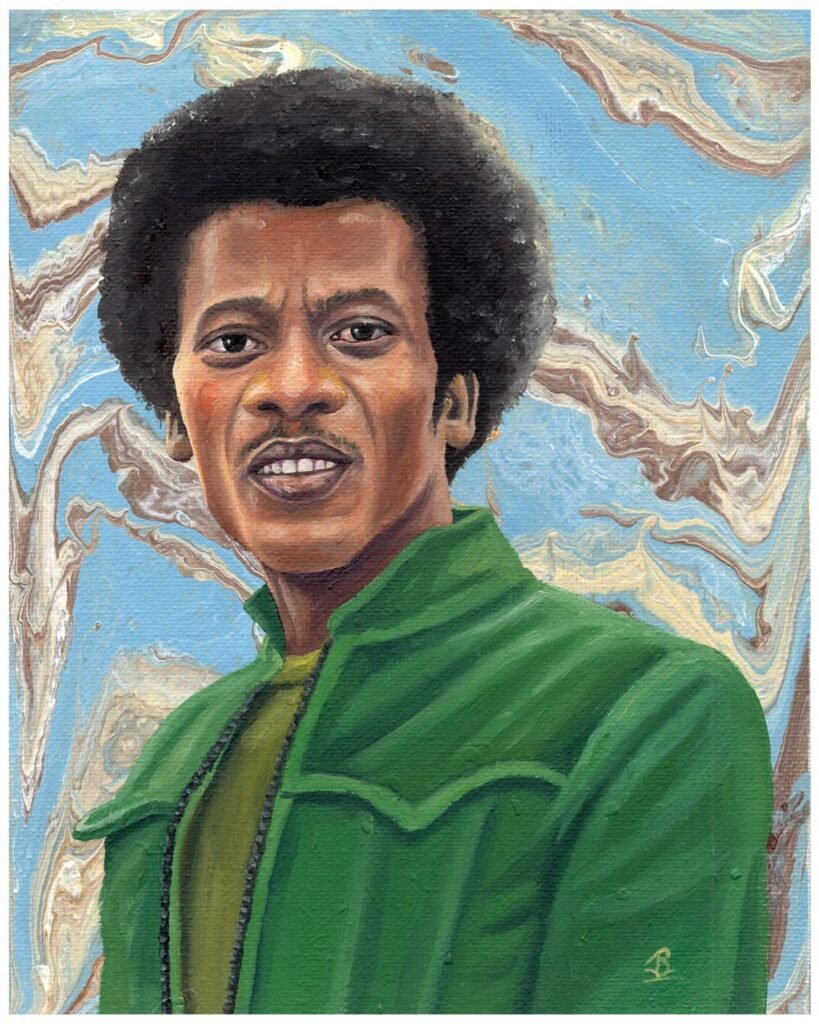
In his early teens, Cliff moved to Kingston, settling in the vibrant but harsh streets of West Kingston. This was the birthplace of sound system culture, where competition was fierce and only the truly gifted survived. Cliff, determined to be heard, visited every sound system and studio that would allow a young country boy through the door.
His persistence paid off when he met Leslie Kong, a pivotal figure in early Jamaican music. Kong instantly recognized Cliff’s unique vocal tone — powerful, expressive, youthful yet wise.
Under Kong’s mentorship at Beverley’s Records, Cliff released early hits such as:
- “Hurricane Hattie”
- “Dearest Beverley”
- “King of Kings”
These songs established him as a rising force in ska and rocksteady long before reggae was fully defined.
THE WORLD TAKES NOTICE — JAMAICA’S YOUNG AMBASSADOR
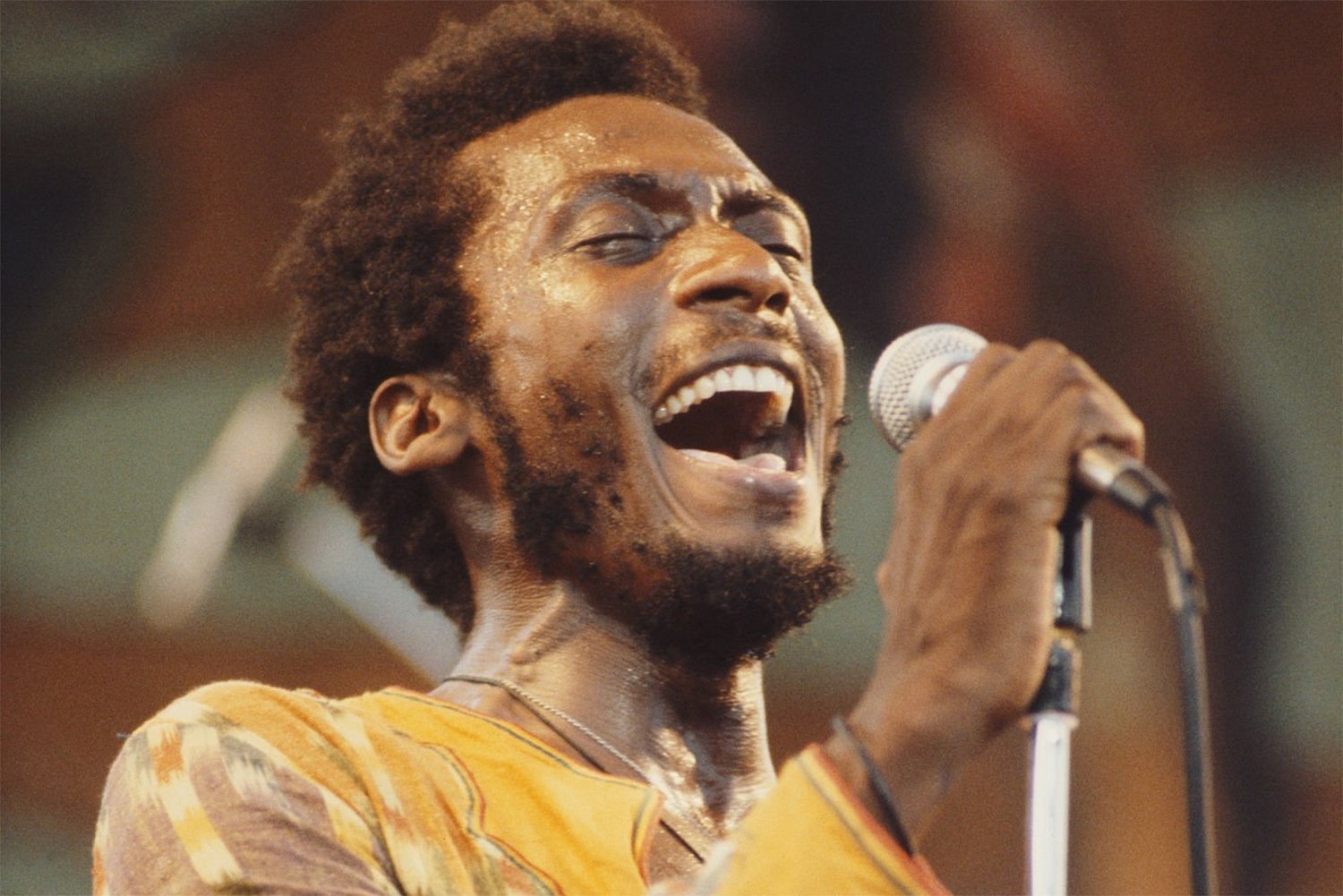
In 1964, Jimmy Cliff was selected to represent Jamaica at the World’s Fair in New York, performing alongside other pioneers who would later become legends. This was Jamaica’s first major appearance on the world stage after gaining independence in 1962. Cliff’s presence helped introduce the energy of Jamaican music to an international audience just discovering Caribbean culture.
Soon after, Cliff relocated to the United Kingdom, where he signed with Island Records. His debut album, Hard Road (1967), hinted that Cliff was more than a local star — he was a global voice with the ability to merge soulful melodies and political consciousness.
THE BREAKTHROUGH MASTERPIECE — “MANY RIVERS TO CROSS”
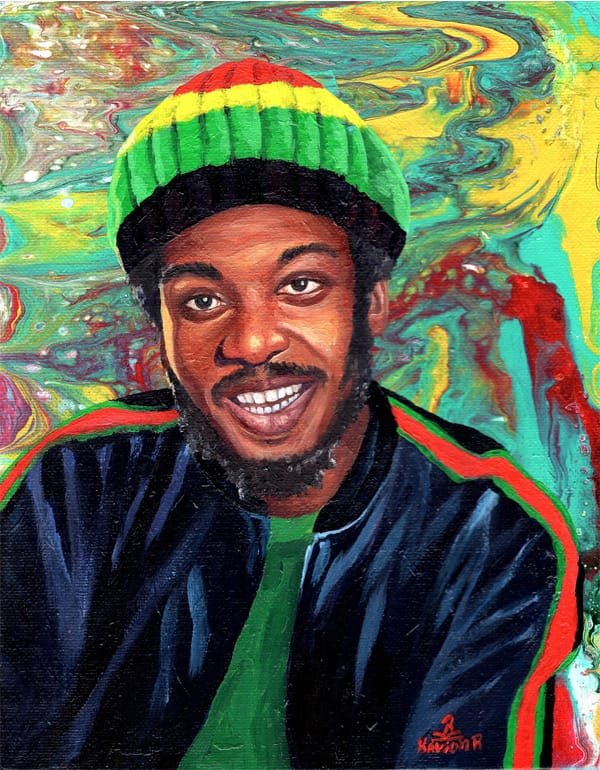
In 1969, Cliff wrote one of the most enduring songs in music history:
“Many Rivers to Cross.”
He penned it during a painful moment in his life, when his career temporarily stalled in England. The song’s cry for strength, direction, and faith struck an emotional chord worldwide. It has since been covered by more than 40 artists and featured in countless films, making it one of the most powerful reggae ballads ever created.
1972: THE HARDER THEY COME AND GLOBAL EXPLOSION
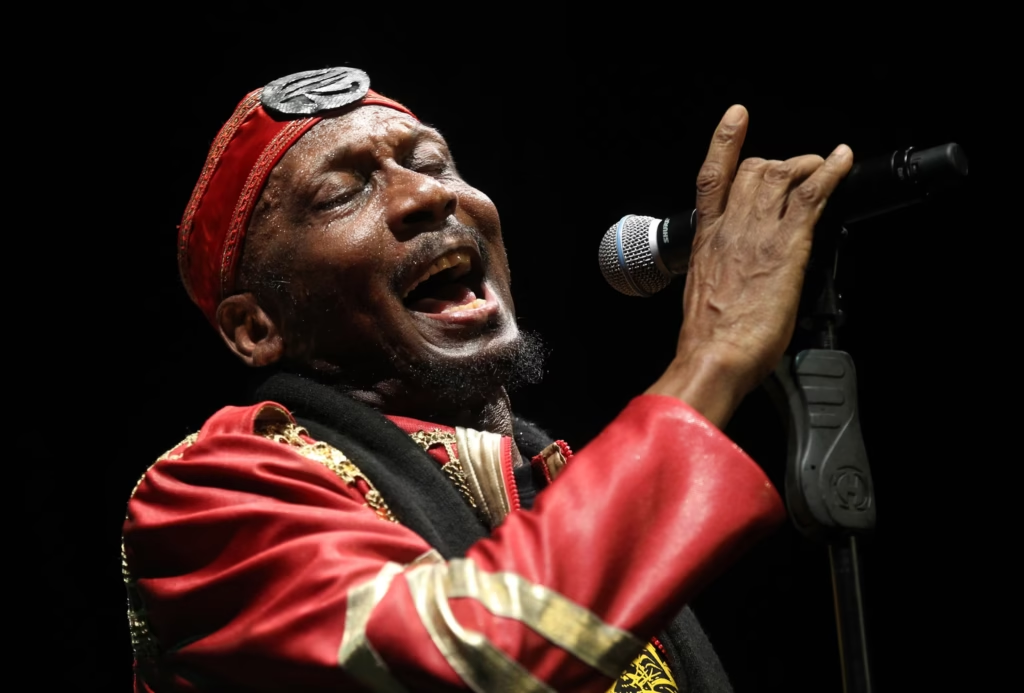
Jimmy Cliff’s global breakthrough came with The Harder They Come (1972) — a film that changed Jamaican music forever.
Cliff starred as Ivanhoe Martin, an ambitious country boy who comes to Kingston chasing dreams but becomes entangled in corruption, exploitation, and violence. The film wasn’t merely entertainment — it was a raw, unfiltered portrayal of post-colonial Jamaica.
The soundtrack, led by Cliff, became a cultural revolution:
- “The Harder They Come”
- “You Can Get It If You Really Want”
- “Sitting in Limbo”
- “Many Rivers to Cross”
These songs introduced reggae to audiences in Europe, North America, Africa, and Asia. Before Bob Marley achieved global dominance, it was Jimmy Cliff who first carried reggae to mainstream international ears.
ACTIVISM, SPIRITUALITY, AND ARTISTIC EXPANSION
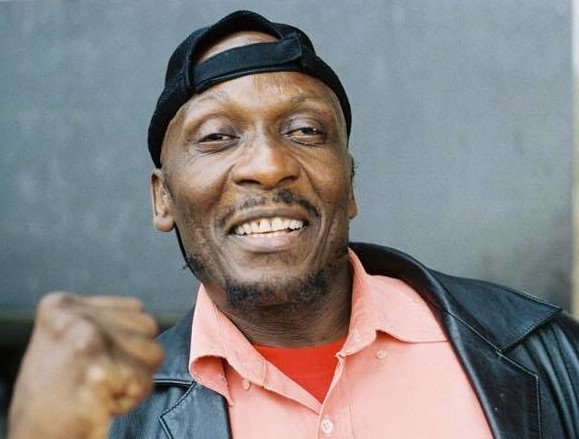
Jimmy Cliff’s work was never confined to entertainment. His music consistently reflected:
- social justice
- political resistance
- spiritual awakening
- pride in Jamaica
- the struggles of ordinary people
From the 1970s onward, Cliff became a cultural ambassador, performing at major peace concerts, humanitarian events, and political gatherings. His songs often addressed inequality and upliftment, making him a global voice for the oppressed.
GLOBAL RECOGNITION AND AWARDS
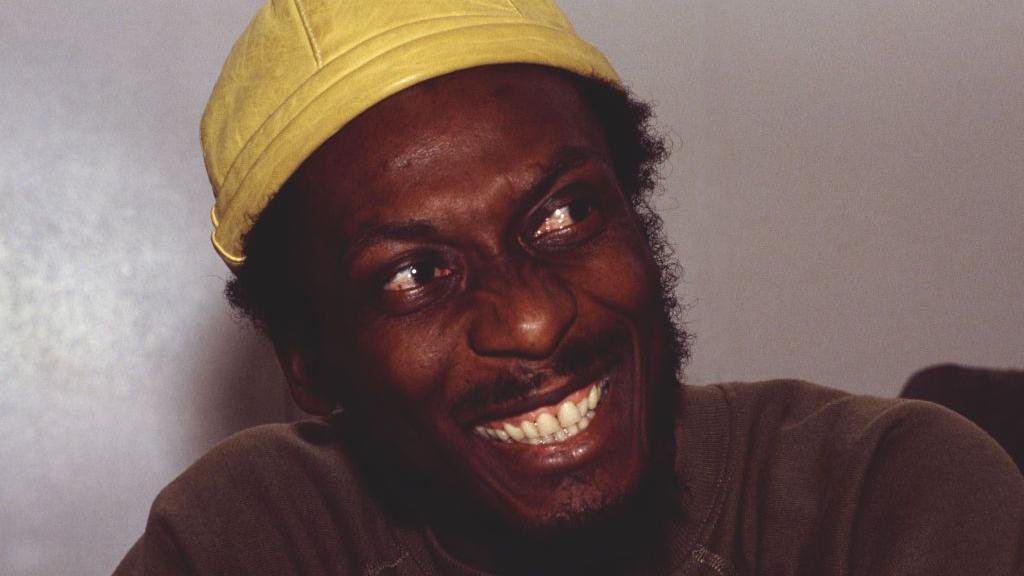
Throughout his career, Jimmy Cliff achieved extraordinary honors, including:
- Induction into the Rock and Roll Hall of Fame (2010)
- Recipient of Jamaica’s Order of Merit (one of the highest national honors)
- Grammy Award wins and nominations
- Honored by governments and cultural institutions worldwide
- Collaborations with international stars like Joe Strummer, Annie Lennox, Wyclef Jean, and others
His music appeared in dozens of films, TV shows, and documentaries. His influence extended across genres — reggae, ska, rock, pop, gospel, and world music.
A VOICE THAT NEVER DULLED
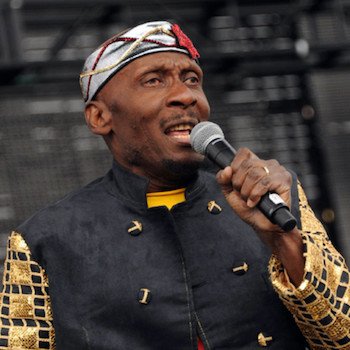
Unlike many artists whose careers fade, Jimmy Cliff remained active well into his later years. His voice — sharp, expressive, unmistakably Jamaican — continued to captivate audiences in live performances long after he passed the age of 70.
Albums such as Rebirth (2012) proved he could adapt to new eras while keeping his spirit intact. His performances remained in high demand, especially in Africa, Europe, and Latin America, where his songs became anthems of unity and hope.
FINAL YEARS AND PASSING OF A LEGEND
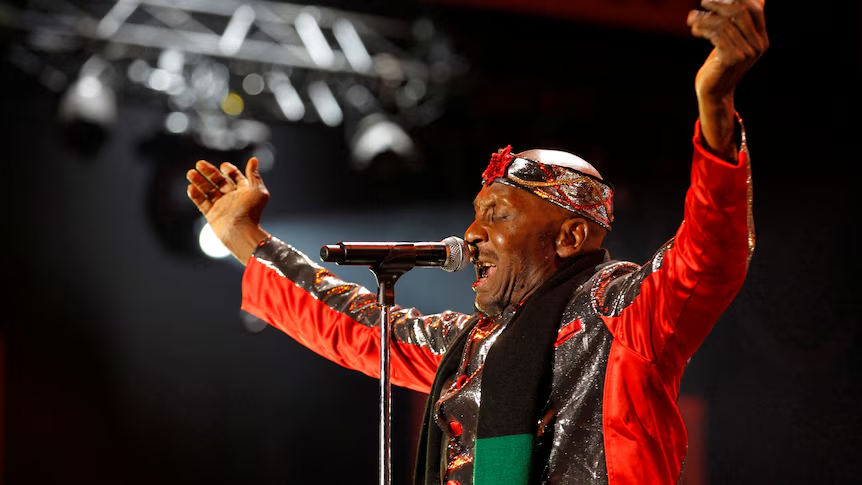
Jimmy Cliff’s passing on November 24, 2025, marked the end of one of Jamaica’s most extraordinary artistic journeys. His death triggered global outpourings of grief — from world leaders to fellow musicians to generations of fans whose lives were shaped by his music.
Radio stations across Jamaica played his songs for days. Murals were painted. Concerts were dedicated to his memory. Scholars reflected on his cultural influence. And Jamaicans everywhere honored the man who helped define the sound of a nation.
THE LEGACY THAT LIVES FOREVER
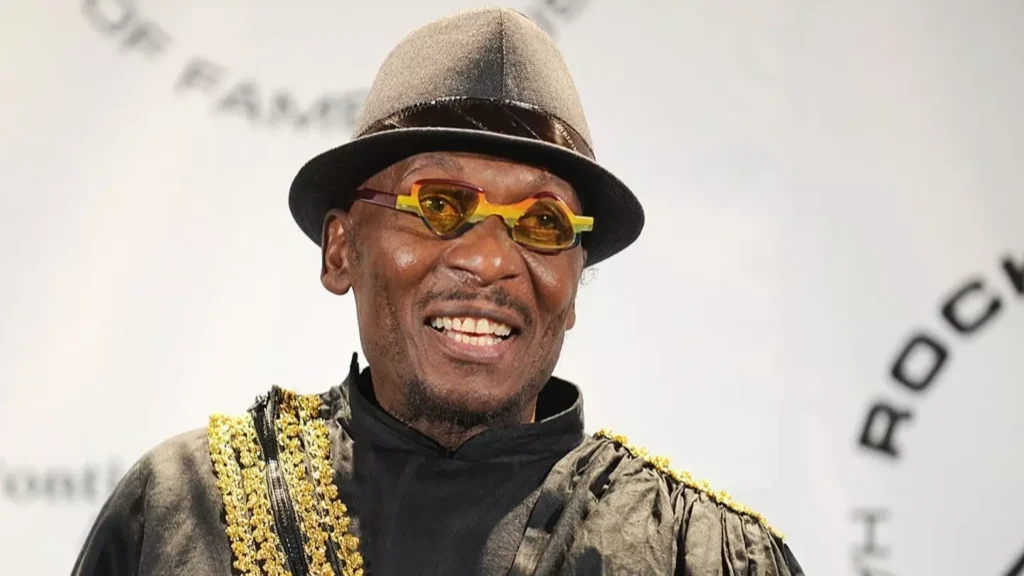
Jimmy Cliff’s greatness lies not only in his music, but in the path he carved for Jamaican culture:
- He broke the global barrier for reggae.
- He used film to expose the realities of Jamaican life.
- He inspired artists from Bob Marley to modern stars.
- He proved that a boy from Somerton could move the world.
His songs continue to guide, heal, and inspire. In every performance of “Many Rivers to Cross,” in every rebellious echo of “The Harder They Come,” Jimmy Cliff’s voice lives on.
Walk good, Jimmy Cliff.
You carried Jamaica to the world, and the world will never forget.
Explore original Jamaican-inspired artwork here- https://www.etsy.com/shop/KavionArt