
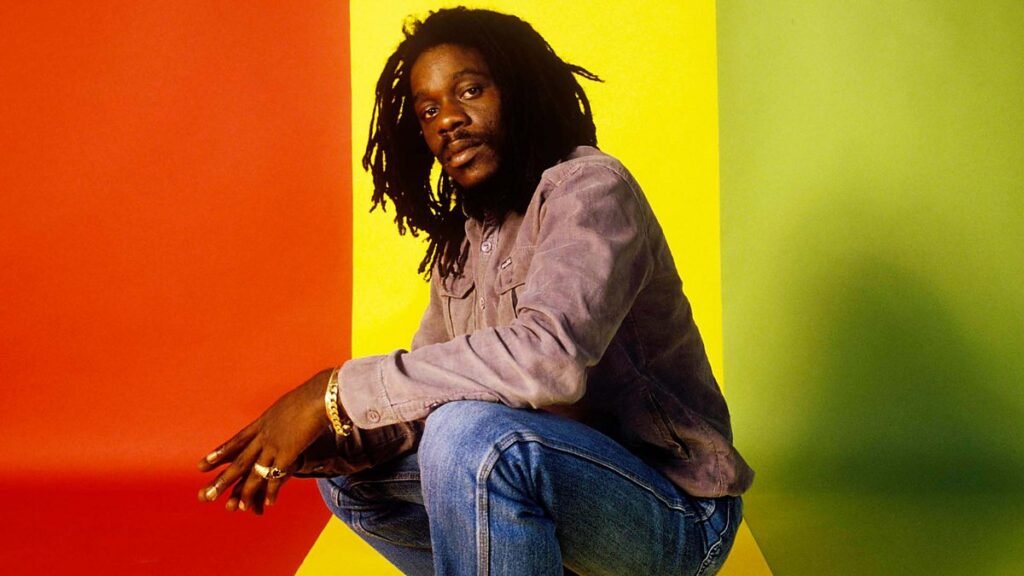
Few voices in global music history carry the emotional weight, versatility, and spiritual depth of Dennis Emmanuel Brown. Revered across generations, genres, and continents, Dennis Brown was not simply a reggae singer—he was a living bridge between Jamaica’s musical soul and the wider world. Crowned “The Crown Prince of Reggae” by Bob Marley himself, Brown’s legacy stands as one of the most prolific, influential, and enduring in Jamaican cultural history.
From Kingston Yard to National Treasure
Born on February 1, 1957, at Victoria Jubilee Hospital in Kingston, Dennis Brown grew up in the heart of downtown Jamaica, in a tenement yard between North Street and King Street. Music surrounded him early. His father, Arthur Brown, was a respected actor, journalist, and scriptwriter, while his brother Basil was a comedian and performer. Just steps away was Orange Street—“Beat Street”—the epicenter of Jamaica’s recording industry during the ska and rocksteady era.
By the time he was nine, Brown was already singing publicly. Neighbours would toss coins just to hear the young boy’s voice float through the yard. Influenced by American soul greats like Nat King Cole, Sam Cooke, Brook Benton, and Frank Sinatra, Brown developed a vocal style that was unusually mature—smooth, controlled, and emotionally precise.
At eleven, his life changed forever. While visiting the Tit for Tat nightclub in West Kingston, he was invited onstage and immediately captivated the room. That performance earned him a spot with the Fabulous Falcons and led to appearances on major shows, where Byron Lee billed him as the “Boy Wonder.” At a Jamaica Labour Party conference, Brown’s performance was so electrifying the crowd showered the stage with money—enough for him to buy his first suit.
Studio One and the Rise of a Prodigy
Dennis Brown’s recording career began in earnest at Clement “Sir Coxsone” Dodd’s legendary Studio One. At just twelve years old, he recorded “No Man Is an Island”, a song that slowly but steadily became one of Jamaica’s biggest hits of the era. The record announced the arrival of a rare talent—one capable of delivering heartbreak, hope, and wisdom well beyond his years.
At Studio One, Brown absorbed everything. He sang harmonies alongside Horace Andy and Larry Marshall, learned guitar from Alton Ellis, and studied the craft under elders like Delroy Wilson, John Holt, Ken Boothe, and Bob Andy. These years shaped him into a complete artist—singer, songwriter, and musician.
Though he left Studio One while still a teenager, the foundation had been laid. Dennis Brown was no longer just a child star; he was a force.
International Breakthrough and Artistic Maturity
The early 1970s marked Brown’s transition from local phenomenon to international reggae star. His collaborations with Winston “Niney” Holness and producer Joe Gibbs yielded some of the most important recordings in reggae history, including “Westbound Train,” “Cassandra,” “Africa,” and “Money in My Pocket.”
“Money in My Pocket” became a cultural landmark—crossing over into the UK charts, dominating sound systems, and eventually reaching the UK Top 40. It remains one of the most successful reggae singles of all time.
At the same time, Brown’s music deepened spiritually. Songs like “Love Jah,” “Repatriation,” and “Take a Trip to Zion” reflected his Rastafari beliefs and placed him firmly within the roots reggae movement. His landmark 1977 album Visions of Dennis Brown blended love songs with militant consciousness and biblical imagery, earning Reggae Album of the Year honors and solidifying his status as Jamaica’s leading male vocalist.
Independence, Innovation, and DEB Music
Unlike many artists of his era, Dennis Brown fought for creative and business independence. In the mid-1970s, he co-founded DEB Music, creating a platform not only for his own work but for emerging artists like Junior Delgado and Gregory Isaacs. From London to Kingston, Brown navigated the complexities of the global music industry while remaining deeply connected to his roots.
His ability to reinvent himself became one of his greatest strengths. When reggae evolved into dancehall in the 1980s, Brown adapted effortlessly—working with producers like Prince Jammy, Gussie Clarke, and Sly & Robbie, while still retaining lyrical depth and vocal excellence.
Prolific Beyond Measure
Dennis Brown recorded over 75 albums and thousands of songs across more than three decades—an output unmatched in reggae history. From lovers rock anthems to militant roots, from dancehall hits to spiritual meditations, his catalogue is vast and remarkably consistent in quality.
He collaborated with nearly every major name in Jamaican music, including Gregory Isaacs, Freddie McGregor, Cocoa Tea, Beenie Man, and John Holt. Younger artists looked to him not just as a star, but as a mentor.
Despite international success, Brown remained deeply communal. As manager Tommy Cowan once noted, Dennis was known to give away his earnings freely, embodying generosity rather than accumulation.
Final Years and Passing
In the late 1990s, declining health—worsened by years of respiratory illness and substance abuse—began to take its toll. After falling ill with pneumonia while touring Brazil, Dennis Brown returned to Jamaica in June 1999. He died on July 1, 1999, at the University Hospital of the West Indies from a collapsed lung.
His funeral was a national moment. Political leaders, fellow musicians, and fans gathered to honour a man whose voice had shaped Jamaica’s identity. He was laid to rest at National Heroes Park.
A Legacy That Lives Forever
Dennis Brown’s influence stretches far beyond his lifetime. Artists such as Barrington Levy, Luciano, Junior Reid, Frankie Paul, Bushman, and Richie Stephens openly credit him as a defining influence. Tributes followed from across the world—albums, concerts, radio stations, and charitable foundations bearing his name.
In 2011, Jamaica posthumously awarded him the Order of Distinction (Commander class) for his contribution to music. In 2023, Rolling Stone ranked him among the 200 Greatest Singers of All Time, placing him alongside the world’s most revered voices.
Yet his truest legacy lives in the music itself—songs that continue to heal, challenge, and inspire. Dennis Brown sang love without triviality, faith without preaching, and struggle without bitterness.
He was not just the Crown Prince of Reggae.
He was its conscience, its heartbeat, and one of its greatest gifts to the world.