
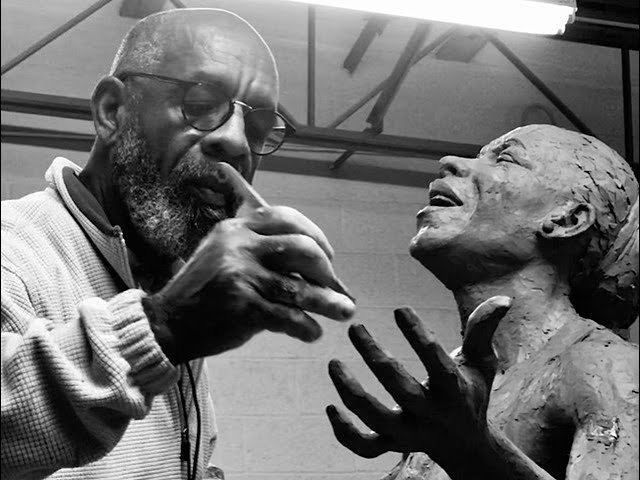
Jamaican sculptor Basil Watson, CD, has been named 2025 Best of Jamaica Person of the Year, an honour that recognises not a single achievement, but a lifetime of shaping how Jamaica remembers itself—and how the world encounters Jamaican history in permanent form.
The award was presented at the 27th Annual Best of Jamaica Awards, an event that celebrates Jamaican excellence across culture, leadership, media, sport, and the arts. In selecting Watson, the honour underscored a truth that has become increasingly clear over decades of work: his sculptures do more than decorate public spaces—they define national memory.
A sculptor of public history
Unlike artists whose work lives mainly in galleries or private collections, Basil Watson’s art lives where people pass every day. His sculptures stand in parks, squares, stadiums, and transport hubs—places where memory becomes part of daily life.
Watson was trained at Jamaica’s Edna Manley College of the Visual and Performing Arts, grounding his practice in rigorous study and a deep respect for form, realism, and proportion. He is also the son of celebrated Jamaican artist Barrington Watson, a lineage that placed him early in a tradition of disciplined, culturally rooted visual storytelling. Yet Basil Watson carved out his own path, choosing sculpture as his medium and public space as his canvas.
His commitment to excellence earned him national recognition in 2016, when he was awarded the Order of Distinction (Commander Class) for his contribution to Jamaican art.
Shaping Jamaica’s national image
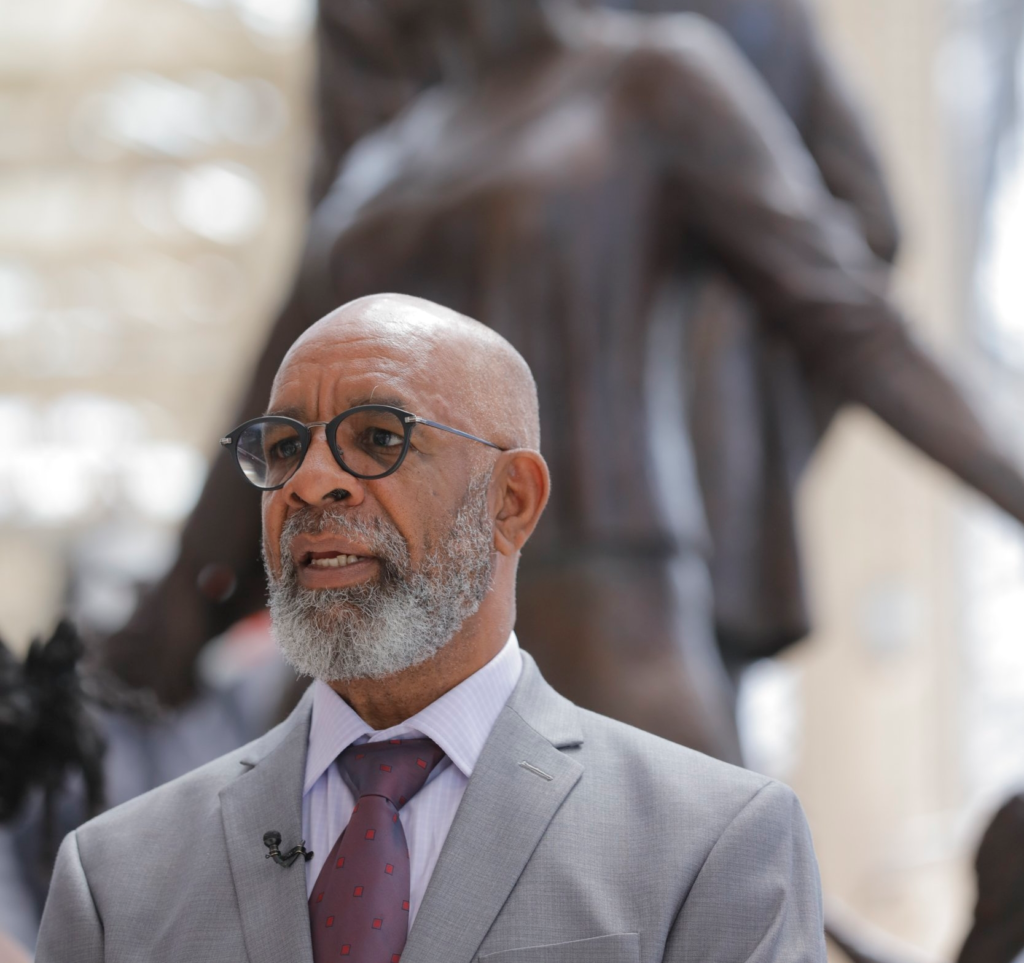
Within Jamaica, Watson’s work has helped define how key figures in the nation’s story are physically remembered. His sculpted busts of Jamaica’s National Heroes, installed in Emancipation Park, present these figures not as distant legends, but as human presences—faces that meet the viewer at eye level.
He also created the bronze statue of Louise Bennett-Coverley (Miss Lou), immortalising the woman who elevated Jamaican dialect, folklore, and performance into pillars of national culture. The sculpture does more than honour Miss Lou; it reinforces the legitimacy of Jamaican language and expression as art worthy of permanence.
In sport, Watson’s sculptures of legendary athletes such as Merlene Ottey and Herb McKenley, displayed at Jamaica’s National Stadium, connect athletic achievement to national pride. These works remind viewers that Jamaica’s global reputation in track and field is not accidental—it is the result of generations of excellence.
Jamaican vision on the world stage
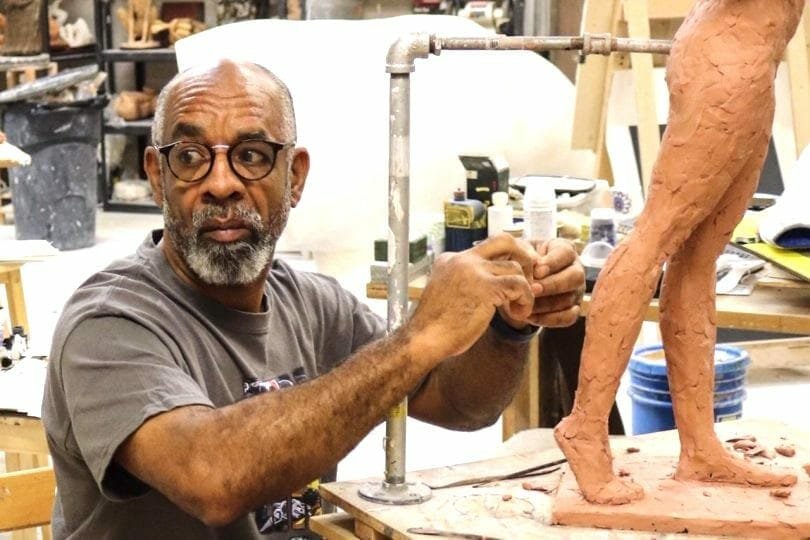
Watson’s influence extends far beyond Jamaica’s shores. One of the most significant milestones in his international career came with his selection to design the National Windrush Monument in the United Kingdom.
Unveiled at London’s Waterloo Station, the monument stands at one of the country’s busiest transport hubs. It commemorates the Windrush generation and the broader Caribbean contribution to British society. The choice of a Jamaican sculptor to create this national symbol was itself historic, signalling recognition of Caribbean voices not only as subjects of history, but as its authors.
The monument is both intimate and monumental—capturing family, movement, resilience, and dignity—qualities that echo throughout Watson’s body of work. It is a reminder that Caribbean migration is not a footnote to British history, but a foundational chapter.
Why his work endures
What distinguishes Basil Watson is not simply technical mastery, but intention. His sculptures insist on visibility. They occupy space. They slow people down. They ask viewers to remember who built, struggled, sang, ran, spoke, and endured.
His work bridges generations—connecting elders who lived the history with young people encountering it for the first time. For Jamaicans in the diaspora, his monuments offer a sense of grounding, a physical reminder that Jamaican identity travels, yet remains rooted.
Watson does not chase trends or spectacle. Sculpture is slow work. It demands patience, precision, and a belief that memory deserves permanence. That discipline is evident in every commission he accepts and every figure he casts.
A recognition built on legacy
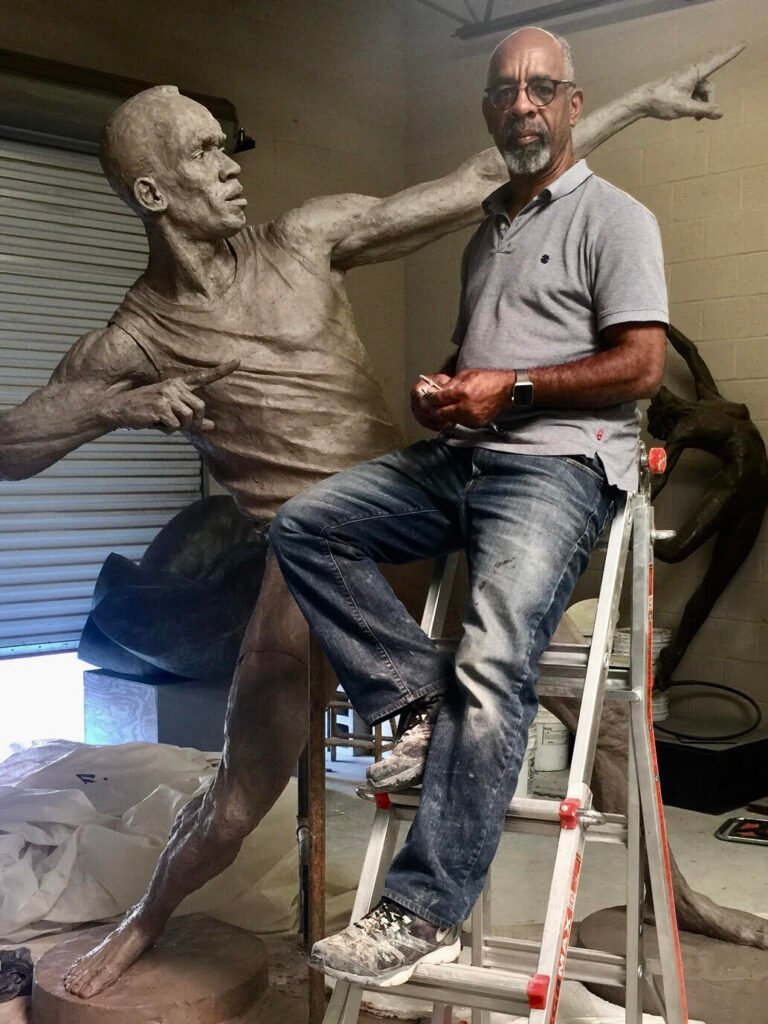
Being named the 2025 Best of Jamaica Person of the Year is not about popularity or a single viral moment. It is about sustained contribution. It is about decades of shaping how a nation sees itself and how it is seen by others.
Through bronze and stone, Basil Watson has given Jamaica something rare: a visual language of dignity, pride, and continuity. His work stands long after ceremonies end and applause fades—quietly doing what the greatest art always does.
It remembers.