
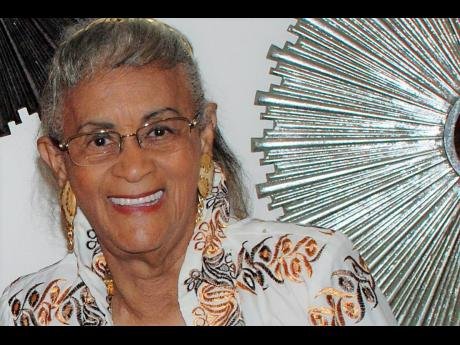
Alma Mock Yen was born in 1928 into a Jamaica still defined by colonial structures and limited opportunities for women in public life. From an early age, she demonstrated a deep curiosity about society, language, and the forces that shape people’s lives. These instincts would later guide her toward journalism, not as a pursuit of fame, but as a vocation rooted in truth, education, and civic responsibility.
Choosing journalism during the mid-twentieth century placed Mock Yen in a field dominated by men and constrained by traditional expectations. Advancement required more than talent. It demanded resilience, confidence, and intellectual rigor. She brought all three, carving out space for herself through consistency and excellence rather than confrontation. Her rise was steady, earned through work that spoke for itself.
Building Standards in Jamaican Journalism
Mock Yen became closely associated with the Jamaica Gleaner, one of the Caribbean’s oldest and most influential publications. Her tenure there coincided with pivotal moments in Jamaica’s national story, including the lead-up to independence and the early decades of nation-building.
As a journalist and editor, she was known for her insistence on accuracy, balance, and context. She resisted sensationalism and firmly believed that journalism had a duty to inform rather than provoke. Her editorial philosophy emphasized clarity of thought and respect for the reader, principles that helped shape newsroom culture and professional standards during a time of rapid political and social change.
Chronicling a Changing Nation
Jamaica in the twentieth century was a country in motion, navigating issues of labor rights, political identity, economic reform, and social justice. Mock Yen’s work engaged with these realities thoughtfully and responsibly. She approached national debates with nuance, understanding that journalism should illuminate complexity rather than reduce it to slogans.
Her writing reflected a deep respect for the Jamaican people and an awareness of the power of the press to influence public opinion. Rather than positioning herself as a commentator above society, she saw journalism as part of the national fabric, accountable to the communities it served.
Broadcasting and the Power of the Spoken Word
Beyond print, Mock Yen also made a significant contribution as a broadcaster. In an era when radio was a primary source of information for many Jamaicans, her calm and authoritative presence carried weight. She understood that broadcasting demanded both precision and empathy, as spoken words reach audiences in intimate and immediate ways.
Her broadcasting style mirrored her written work. Measured, thoughtful, and grounded in facts. She avoided theatrics and focused instead on substance, earning trust across social and political lines. Through radio, she expanded her reach and reinforced the role of media as a tool for public education.
Commitment to Education and Public Thought

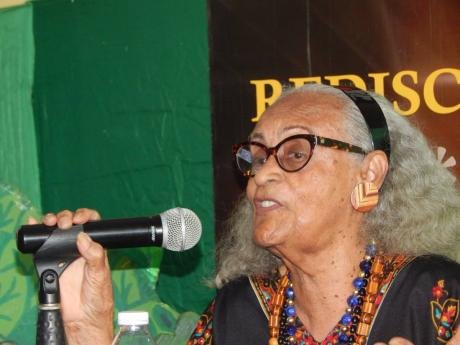
One of the most enduring aspects of Mock Yen’s legacy lies in her work as an educator. She lectured at the Hugh Shearer Labour Studies Institute, formerly the Trade Union Education Institute at the University of the West Indies. There, she helped students understand how journalism intersects with labor movements, politics, and social development.
Her teaching emphasized critical thinking, ethical responsibility, and the importance of questioning narratives. Students were encouraged not just to consume information, but to analyze it. Many who passed through her lectures recall her as demanding yet fair, firm yet deeply invested in their growth. She did not simply teach journalism. She taught how to think.
Representation and Cultural Significance
As a woman of Chinese Jamaican heritage, Mock Yen’s presence in national media carried cultural significance beyond her professional achievements. At a time when leadership roles in journalism rarely reflected Jamaica’s diversity, she embodied the island’s multicultural reality. Without making her identity a focal point, she quietly expanded representation and challenged narrow definitions of Jamaican identity.
Her career demonstrated that Jamaican nationhood is enriched by many histories and perspectives. In doing so, she helped normalize diversity within public discourse, contributing to a more inclusive understanding of who belongs and who leads.
Integrity Across Decades of Change
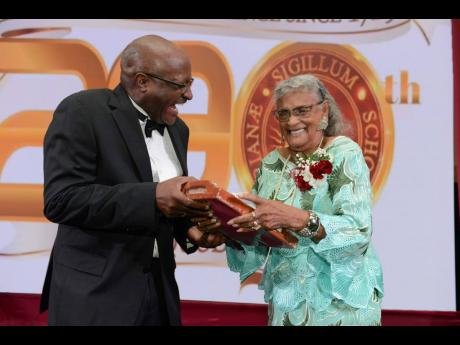
Living to ninety seven allowed Mock Yen to witness profound transformations in both Jamaica and the global media landscape. She saw the shift from print dominated journalism to the digital age, where speed often eclipses depth. Yet throughout these changes, her values remained unchanged.
She believed that facts matter, ethics matter, and that journalism loses its purpose when it abandons humanity. Her career now stands as a counterpoint to an era increasingly defined by misinformation and outrage driven narratives. It is a reminder that credibility is built slowly and lost quickly.
A Legacy That Endures
Alma Mock Yen’s passing marks the close of a remarkable chapter in Jamaican media history. Yet her influence continues through the standards she upheld, the journalists she inspired, and the students she challenged to think critically about the world around them.
She was a pioneer not through loud declarations, but through steady excellence and moral clarity. Jamaica has lost a respected voice, but her legacy endures in every newsroom that values integrity, every classroom that teaches critical thought, and every reader who still believes journalism can serve the public good.