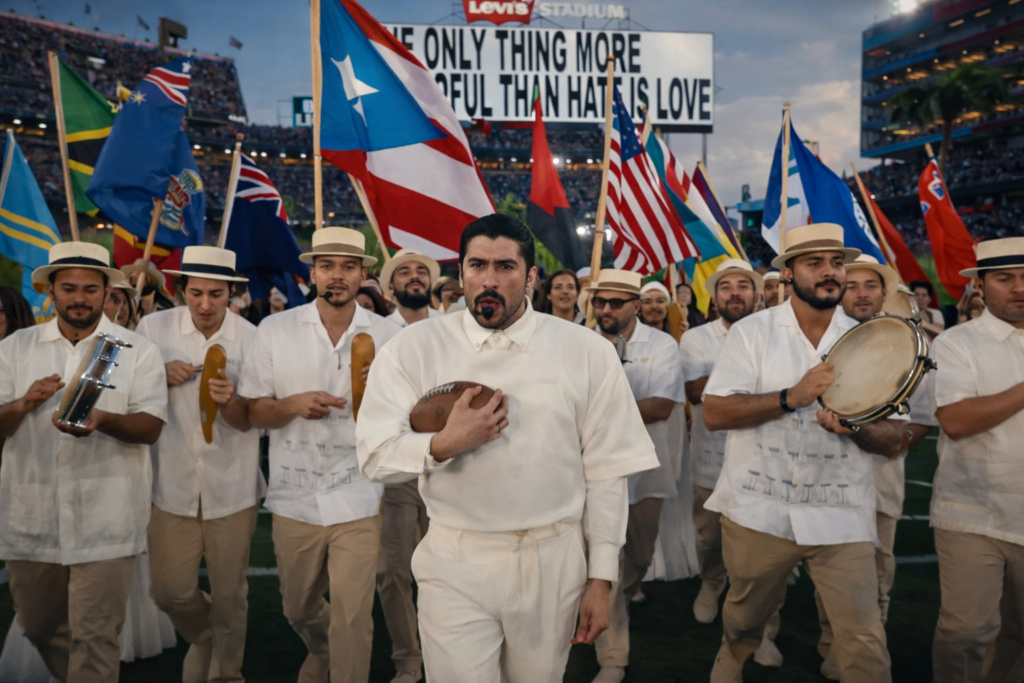
On Sunday, February 8, 2026, Bad Bunny headlined the Apple Music Super Bowl LX Halftime Show at Levi’s Stadium in Santa Clara, California, and one detail has Jamaicans buzzing: the Jamaican flag appearing in a closing sequence built around the idea of the Americas and the Caribbean standing side by side.
What the performance was really about
At its core, Bad Bunny’s show was a visual love letter to Puerto Rico and to the wider Caribbean and Latin American world. The staging leaned heavily into everyday cultural imagery, not the glossy “tourist brochure” version, but scenes that feel lived in and familiar: the show opened with Bad Bunny moving through a sugar cane field, with dancers styled like field workers, grounding the performance in history, labour, and identity.
From there, the field became a neighbourhood canvas. Viewers saw set pieces evoking community life, including a piragua stand and bright, home-style visuals during parts of the set. These weren’t random props. They were signals: this show was saying that culture is made in ordinary spaces, in food, music, yards, street corners, family moments, and shared memory.
The music and the momentum
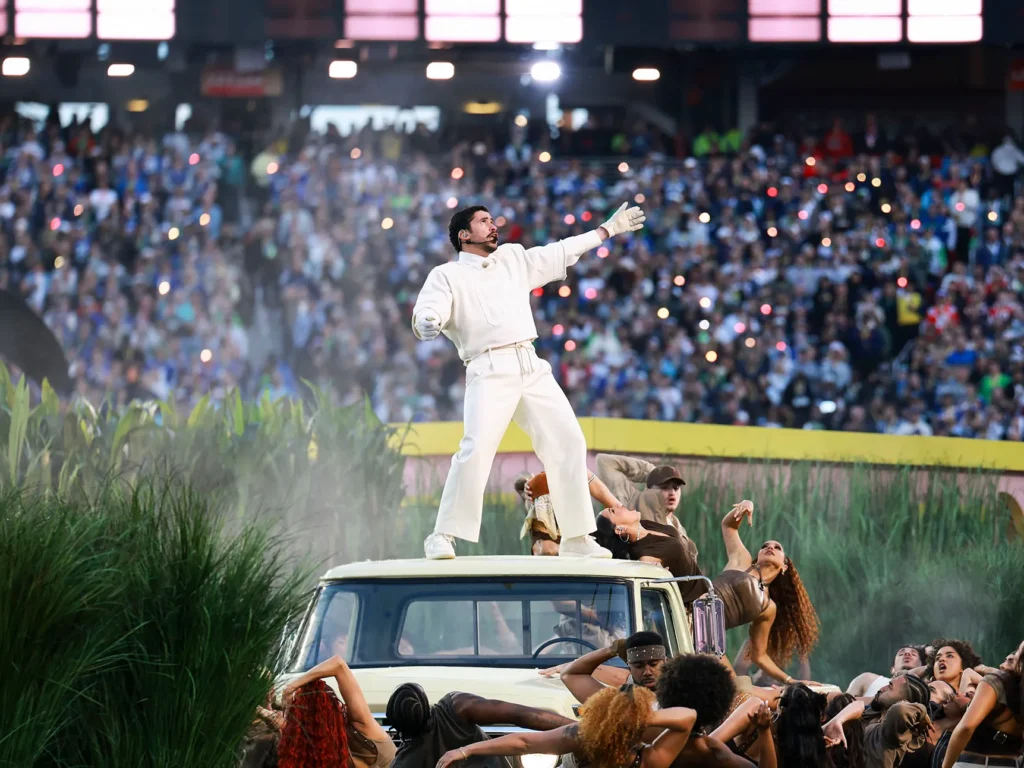
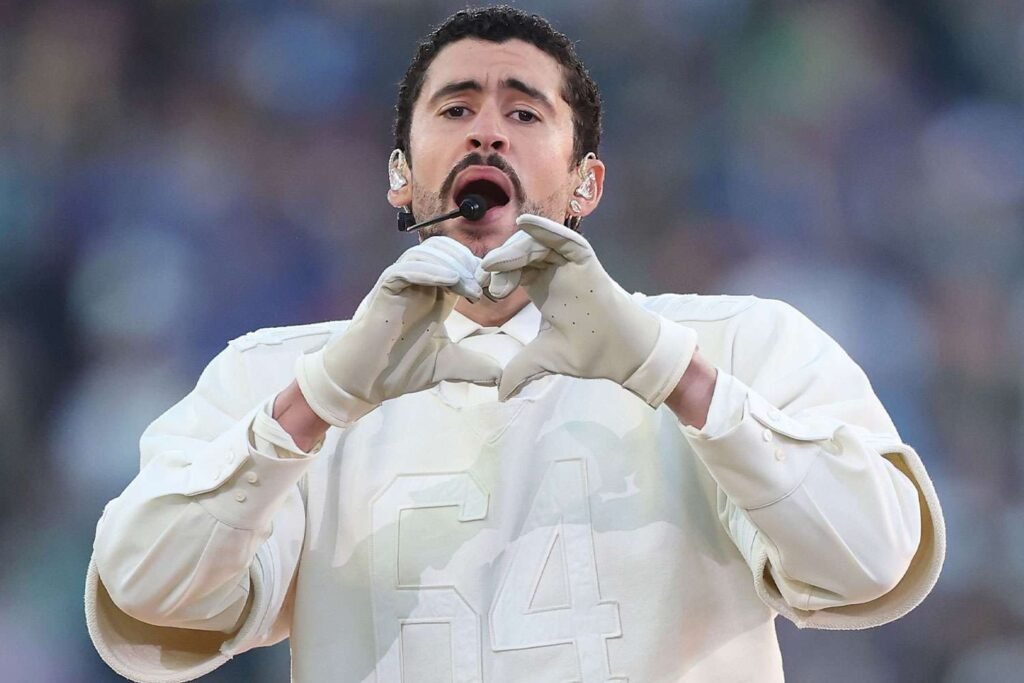
Bad Bunny opened with “Tití Me Preguntó” and kept the energy high with a run of major hits. Coverage of the setlist highlights songs including “Yo Perreo Sola” and a closing moment built around “DtMF,” with fireworks at the end.
The cameos also mattered, because they reinforced the “connected Americas” theme. Reports described appearances and moments featuring names like Lady Gaga and Ricky Martin, along with other celebrity faces woven into the staging and choreography.
The message that made the Caribbean lean in
The part Jamaicans are circulating most is the show’s closing symbolism: Bad Bunny held a football marked with the phrase “Together we are America,” and the show leaned into a wider unity message, including a statement about love being stronger than hate. This was the sequence where flags from across the hemisphere appeared, and where many Jamaicans spotted black, green, and gold in the mix.
That choice is why the moment landed the way it did. The Super Bowl stage is one of the biggest entertainment platforms on earth. When Jamaica shows up there, even for seconds, it hits different, because it feels like visibility. Not just “Caribbean vibes,” but Jamaica named and represented in a larger regional story.
Why did it strike a nerve in Jamaica?
Jamaicans are used to seeing our flag travel through sport and culture, but this wasn’t a track meet or a reggae tribute. It was a global pop spectacle framed as a hemispheric statement: the Americas are intertwined, and Caribbean identities belong in that picture.
That’s also why debate followed. Some commentary in international coverage framed the show as boundary-breaking for Spanish-language music and identity in mainstream US culture at a time when immigration and belonging are hot-button issues. In that context, the flags were not decorations. They were part of the argument.
The real takeaway
Bad Bunny didn’t build a halftime show around one country’s flag. He built it around recognition: recognition of Puerto Rico’s cultural core, and recognition that the Caribbean and Latin America are not “outside” the story, they are inside it.
And that’s why Jamaicans are talking. Because when the Jamaican flag flashes in a moment like that, it’s not only pride. It’s the feeling of being seen, briefly but clearly, on a stage that rarely pauses to acknowledge small nations with big cultural footprints.