
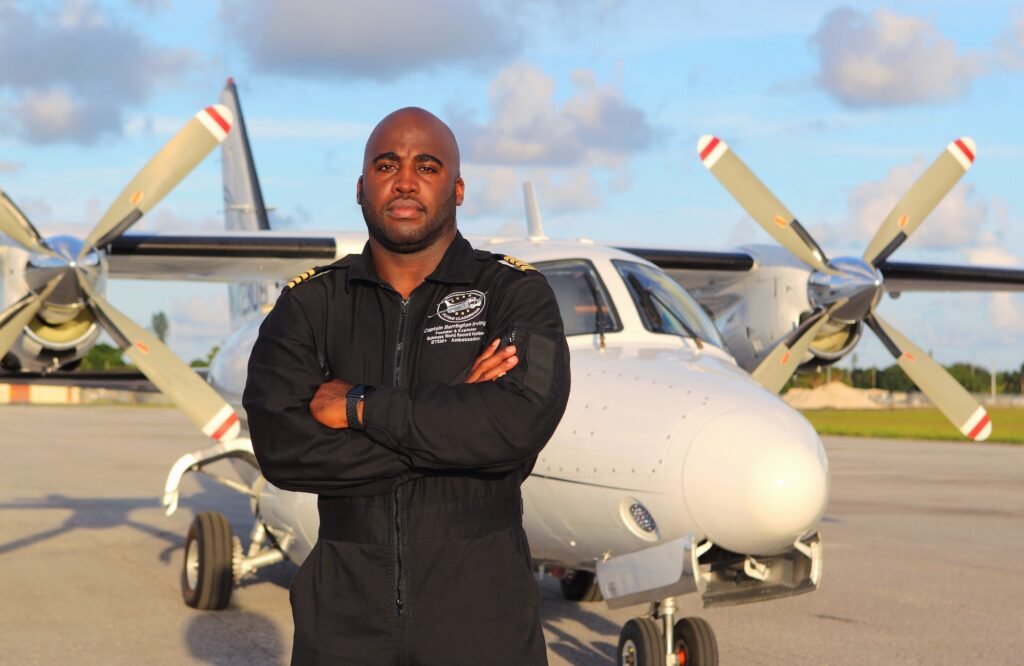
Barrington Irving Jr.’s story is not simply one of aviation excellence. It is a story of vision formed against the odds, of history made through discipline and courage, and of a legacy that continues to lift young people toward futures once thought unreachable. His name now stands among the great pioneers of flight—not because he followed an established path, but because he carved an entirely new one.
From Kingston to the Clouds
Born in Kingston, Jamaica, and raised in the United States, Irving’s early life did not point naturally toward aviation. There were no pilots in his immediate family, no financial safety nets, and no clear roadmap into an industry that has historically excluded people who look like him. Aviation is among the most expensive and exclusive professions in the world, and Black pilots make up only a small fraction of licensed aviators globally.
Yet Irving’s journey began with a defining moment of exposure. As a teenager working at Miami-Opa Locka Executive Airport, he encountered a Jamaican pilot who invited him into the cockpit of an aircraft. That brief experience changed everything. It transformed aviation from a distant concept into a tangible possibility.
From that moment forward, Irving committed himself fully to flight—studying relentlessly, working multiple jobs, securing sponsors, and earning his pilot’s license through persistence rather than privilege.
The Flight That Changed Aviation History
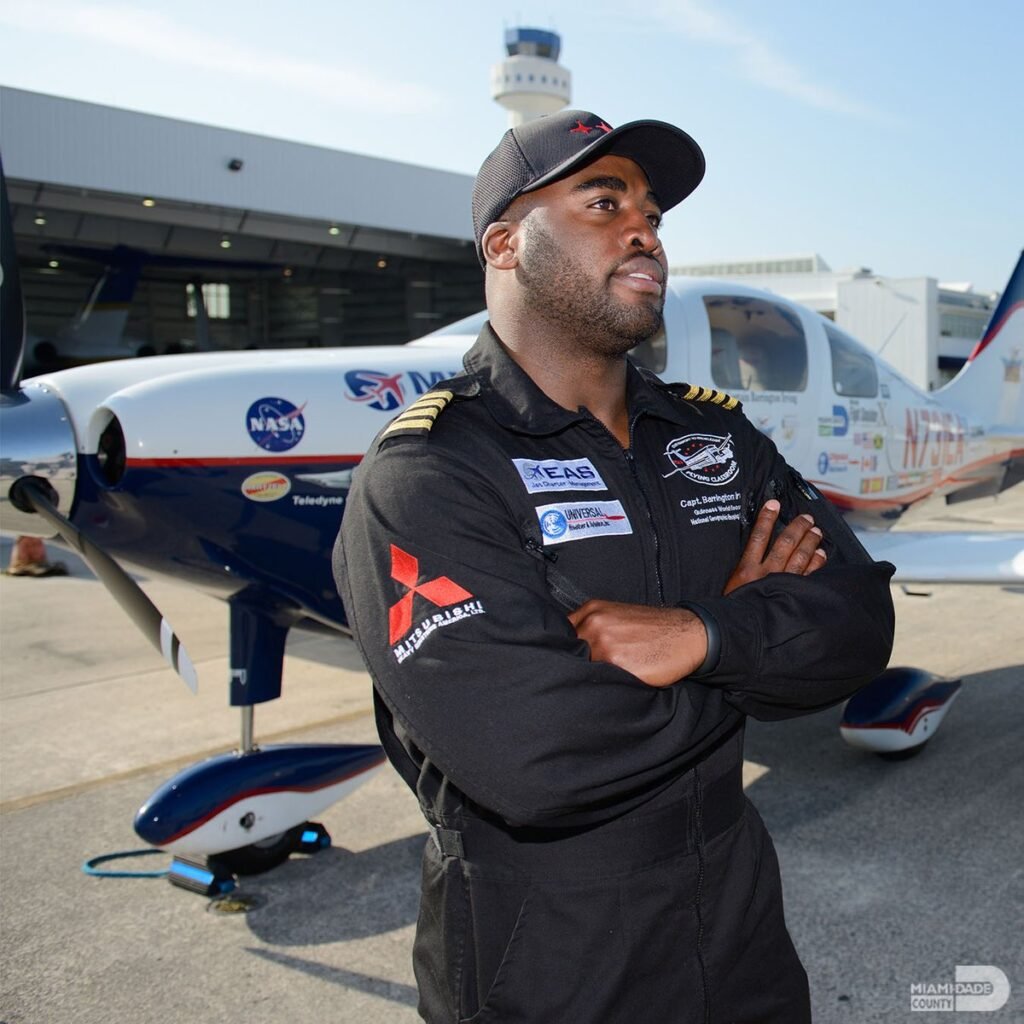
In 2007, Barrington Irving Jr. entered the history books by becoming the first Black pilot to fly solo around the world. At just 23 years old, he was also the youngest person at the time to complete a solo circumnavigation by aircraft.
This was no symbolic or assisted journey. Irving flew alone in a single-engine Columbia 400, navigating approximately 30,000 miles across five continents, dozens of countries, and some of the most complex airspaces on Earth. His journey took 159 days—a detail often misreported online—but each of those days required extraordinary precision, endurance, and mental strength.
Flying solo meant Irving had no co-pilot to rely on, no immediate backup in the event of mechanical failure, and no margin for error while crossing oceans, deserts, and mountain ranges. He faced extreme weather systems, unfamiliar air traffic regulations, language barriers, and the constant physical and psychological strain of flying long distances alone.
Every successful landing was a victory not just for him, but for representation in global aviation.
Shattering Barriers, Not Just Records
Irving’s achievement did more than break records—it shattered perceptions.
For decades, aviation had quietly sent the message that it was not a place for Black excellence. Irving’s flight dismantled that narrative on a global stage. He proved that mastery of one of the most technical, demanding professions in the world was not defined by race, background, or wealth, but by preparation, discipline, and belief.
International media took notice. Aviation institutions took notice. Most importantly, young people took notice.
Turning Achievement Into Purpose
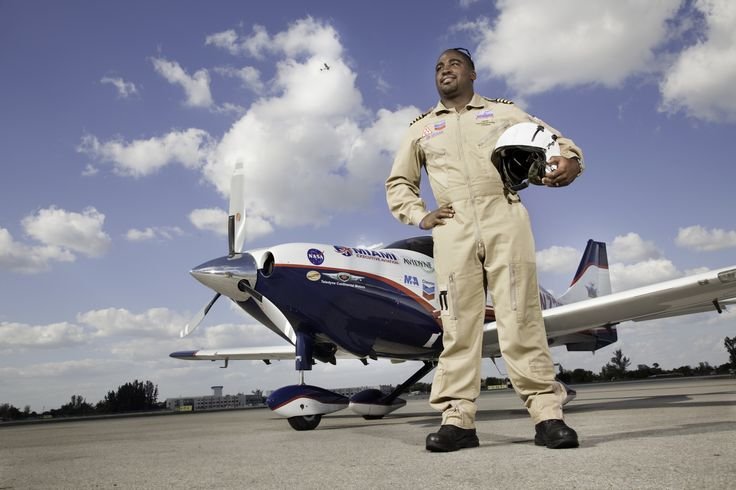
Rather than allowing his historic flight to become a personal milestone frozen in time, Irving transformed it into a mission. He founded Experience Aviation, a nonprofit organization dedicated to introducing young people—particularly those from underserved communities—to STEM, aviation, and aerospace careers.
Through hands-on learning, flight simulators, academic mentoring, and real-world exposure, Experience Aviation works to close the gap between curiosity and opportunity. The organization has reached tens of thousands of students, helping them understand that pilots, engineers, scientists, and innovators can come from their communities too.
Irving’s work emphasizes that exposure is often the missing link. Many young people never pursue aviation or STEM careers simply because they never see themselves reflected in them. Experience Aviation exists to change that reality.
Rooted in Jamaican Pride
Throughout his journey, Irving has consistently honored his Jamaican roots. He speaks openly about how his heritage shaped his resilience, work ethic, and confidence. His success resonates deeply across Jamaica and the global Jamaican diaspora, standing as a reminder that Jamaican brilliance has always extended far beyond the island’s shores.
His story aligns with a long tradition of Jamaican trailblazers who have defied expectations in sports, politics, science, and culture—individuals who refused to accept the limits placed on them and instead redefined what was possible.
A Legacy Still Climbing
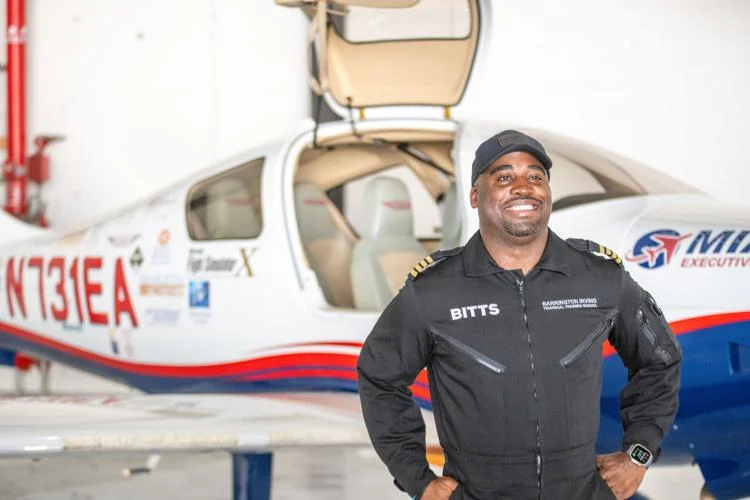
Today, Barrington Irving Jr. continues to fly, educate, mentor, and advocate. His legacy is not measured only in miles flown or records held, but in minds opened and futures redirected. Each student, inspired by his journey, represents a continuation of the flight he began years ago.
Barrington Irving Jr. did not merely fly around the world.
He expanded the boundaries of who the world believes can fly.
And in doing so, he ensured that generations to come would look to the sky and see possibility—not limitation—reflected at them.