
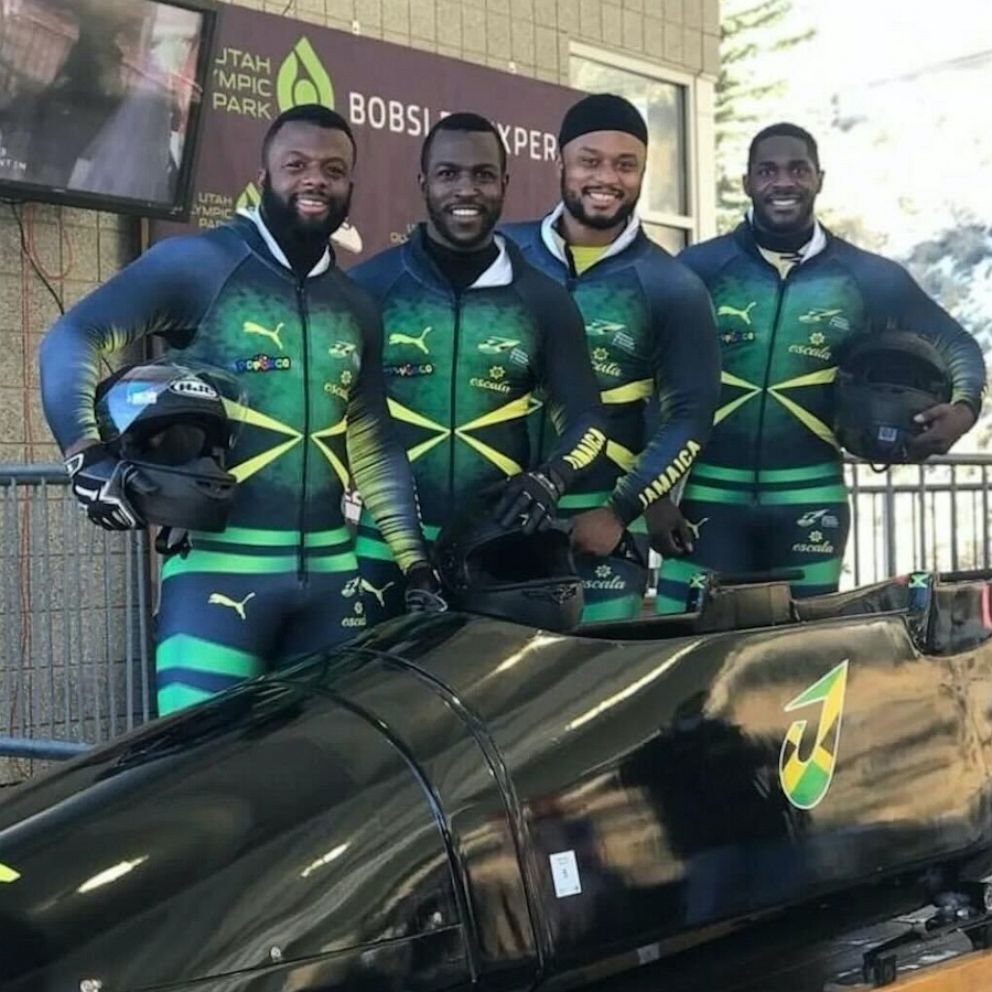
Jamaica has once again proven that greatness can emerge from the most unexpected places. On the icy track in Whistler, Canada—far from the tropical heat of the Caribbean—a Jamaican four-man bobsleigh team delivered a performance that will be remembered for generations. Their gold-medal victory at the IBSF North American Cup marks a defining moment in the nation’s athletic evolution. It is not merely a win; it is the culmination of years of belief, discipline, and the relentless pursuit of excellence.
A Performance That Redefined Expectations
The Jamaican team—Shane Pitter, Andrae Dacres, Junior Harris, and Tyquendo Tracey—arrived at Whistler prepared to do more than participate. From their first push off the start block, it was evident that this was a squad driven by precision and unity. In Heat 1, they powered down the track in 53.00 seconds, establishing themselves as leaders. By Heat 2, they sharpened their rhythm even further, clocking 52.88 seconds, a demonstration of technical refinement and athletic command. Their combined time of 1:45.88 secured the gold medal, placing Jamaica ahead of traditionally dominant winter nations and cementing their place in the sport’s competitive landscape.
To understand the magnitude of this achievement, one must consider the nature of the Whistler track. It is regarded as one of the fastest, most unforgiving bobsleigh tracks in the world. Navigating its steep descents and razor-sharp curves requires not only raw power but exceptional control, strategy, and mental fortitude. Jamaica displayed all these traits—not as outsiders hoping for a lucky run, but as athletes who had earned their place among the best.
From Humble Origins to High-Performance Excellence
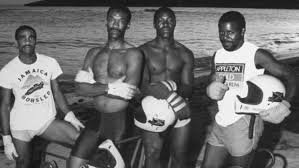
This moment cannot be separated from the history that precedes it. Jamaican bobsleigh entered global consciousness in 1988 with the Calgary Winter Olympics. Those early pioneers captured the world’s imagination, not because they won, but because they dared. Their journey, dramatized in the film Cool Runnings, made Jamaica a symbol of heart and determination in winter sports. But what began as a bold experiment has evolved into a serious, structured athletic program.
Today’s generation is not operating on novelty or nostalgia. They are backed by science-driven preparation, international coaching partnerships, targeted athlete recruitment, and rigorous conditioning. They train abroad on real tracks, analyze data, and commit to the technical demands of a sport that is far more complex than its speed might suggest. The gold in Whistler represents the maturity of a program that has transformed from underdog curiosity into a legitimate contender.
A Global Statement of Jamaican Capability
The historic win carries a profound meaning not only for the athletes but for Jamaicans across the world. Jamaica’s diaspora stretches across continents—Canada, the United States, the United Kingdom, and beyond—and many Jamaicans living abroad experience winter sports as part of their adopted environments. To see their country excel in a sport so far removed from its natural climate is a stirring reminder of the island’s boundless potential.
At home, where snow is nothing more than a distant image, the victory becomes an emblem of national pride. It affirms that Jamaican excellence is not confined to the sprint track, football field, or cricket pitch. This gold medal reinforces a consistent truth: no matter the arena, Jamaicans rise.
The Significance of the Moment
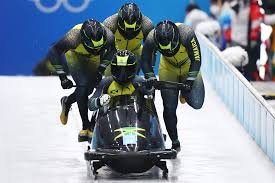
A medal in the North American Cup may seem, at a glance, like a regional victory. But in the world of bobsleigh, it represents a critical milestone on the path toward the highest stages: the World Cup circuit and the Winter Olympic Games. Jamaica’s triumph signals that they are not merely competitive—they are capable of winning.
More importantly, it shifts global perception. For decades, Jamaican bobsleigh was viewed through a lens of charm and inspirational novelty. This win demands recognition of technical proficiency, athletic intelligence, and elite ability. It is a redefining moment that signals Jamaica’s intention to build a lasting presence in winter sports.
A Future Built on Confidence and Momentum
What happens next for Jamaica’s bobsleigh program will be shaped by this victory. Confidence breeds ambition, and ambition fuels progress. With the gold medal at Whistler, the team enters their next competitions with heightened belief and international respect. Funding opportunities, training access, and global visibility all rise with such achievements.
The gold medal is not only a symbol of success; it is a catalyst. It opens doors for emerging athletes who may one day wear the national colors on the ice. It reinforces the value of investment in non-traditional sports. And it carries the legacy of the pioneers who once pushed a borrowed sled onto the world stage and planted the seed for what has now blossomed.
A Triumph That Honors the Past and Shapes the Future
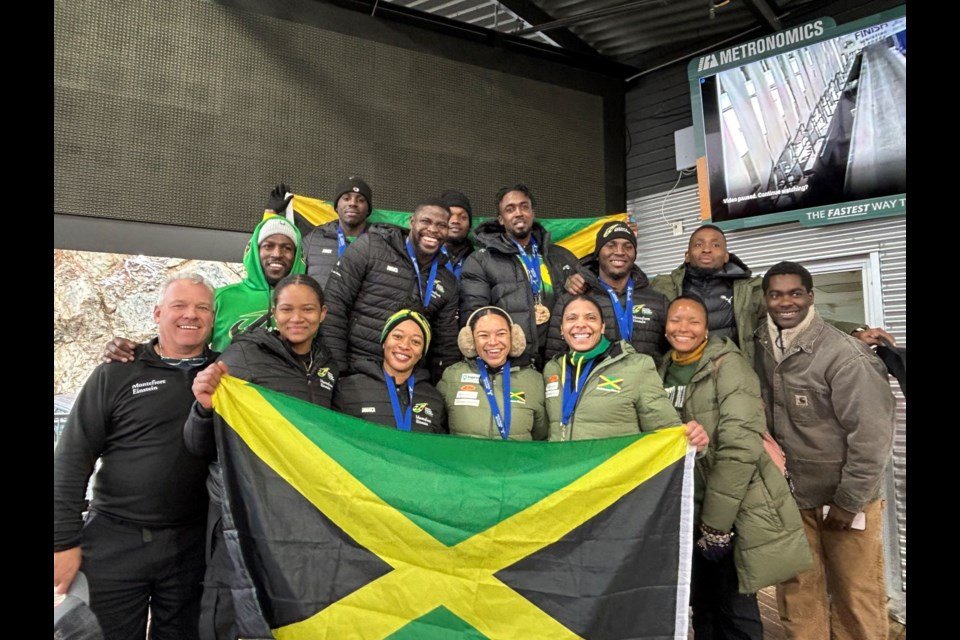
As Pitter, Dacres, Harris, and Tracey stood with the Jamaican flag draped proudly before the snow-dusted mountains of Whistler, the moment felt like a bridge between eras. The dreams of 1988 had not faded—they had evolved. What was once a tale of courage has now become a story of mastery. The Jamaican bobsleigh team has entered a new chapter, one defined not by the novelty of their presence, but by the power of their performance.
Jamaica’s first gold medal in the IBSF North American Cup is more than a sporting achievement. It is a testament to resilience, vision, and national spirit. It proves once again that Jamaica is a force capable of shining anywhere—whether under the blazing sun of the Caribbean or the frozen air of a Canadian winter.
And as this new era begins, one truth stands unmistakably firm: Jamaica’s story on ice is only just getting started.